The best walking pad for most people is the WalkingPad Z1 because it folds in half, has a usable 47.6-inch belt, and stores in places where a rigid treadmill simply can’t. The DeerRun Q2 is the better budget buy if you have permanent floor space and want to spend substantially less than the Z1.
This page contains affiliate links. If you buy through these links, we may earn a small commission at no extra cost to you. Full disclosure.
Most walking pad lists are affiliate catalogues with ten nearly identical machines and no reason to choose one over another. This list is shorter on purpose. I compared current specifications, storage dimensions, weight limits, warranties, independent reviews, and verified buyer feedback. I didn’t pretend to test six treadmills that I haven’t used.

The Short Version: Buy the WalkingPad Z1 on Amazon.com if compact storage matters. Buy the DeerRun Q2 on Amazon.com if price matters more than folding. The best walking pad is still the wrong tool if you need to run, use steep incline training, or walk for several uninterrupted hours.
Product links were checked September 13, 2026. Check the retailer page for current price, seller, delivery, and availability.
Table of Contents
- Walking Pad vs Under Desk Treadmill
- Comparison
- How I Chose
- The Six Picks
- One Model to Skip
- Buying Guide
- Walking Pad vs Treadmill
- Are Walking Pads Worth It?
- Best Walking Pads in Canada
- FAQ
- Bottom Line
Walking Pad vs Under Desk Treadmill
The names overlap. Retailers use “walking pad” for a low-profile treadmill without fixed handrails, while “under desk treadmill” describes how it’s used. A folding walking pad such as the Z1 has a deck that hinges for storage. A rigid model such as the DeerRun Q2 rolls away but doesn’t become shorter.
The important distinction isn’t the label. It’s whether the machine fits under your desk at walking height, fits through your storage route, and supports your body weight with a sensible margin. Our separate under desk treadmill guide goes deeper on work-focused models. If you want movement without a motorized belt, see the under desk elliptical guide.
Best Walking Pad Comparison
The table links to current US retailer pages. Noise numbers are only included when there’s a named source. A manufacturer describing its own motor as “quiet” isn’t a measurement.
| Model | Best for | Speed | Capacity | Dimensions | Price | Noise evidence | Folds? | Product details |
|---|---|---|---|---|---|---|---|---|
| WalkingPad Z1 | Best overall | 1 to 3.7 mph | 242 lb | 56.1 x 22 x 4.1 in | Check current price | 57.3 dB average in Tom’s Guide test | Yes, deck folds | Check Amazon |
| DeerRun Q2 | Best budget | 0.6 to 3.8 mph | 300 lb | 42.6 x 19.7 x 3.9 in | Check current price | No reliable independent figure | No | See card below |
| UREVO Smart | Best app value | 0.6 to 4 mph | 265 lb | 42.1 x 19.3 x 4.2 in | Check current price | No reliable independent figure | No | See card below |
| Goplus Walking Pad | Best simple controls | 0.5 to 4 mph | 340 lb | 43 x 19 x 4.7 in | Check current price | Maker claims below 45 dB | No | Check Amazon |
| Egofit Walker Pro M1 | Best fixed incline | 0.6 to 3.1 mph | 220 lb | 38.4 x 21.9 x 6.9 in | Check current price | Maker claims below 70 dB | No | See card below |
| MERACH NovaWalk W50 | Best auto incline | 0.6 to 4 mph | 400 lb | 50.2 x 22.2 x 6.1 in | Check current price | Maker claims below 45 dB | No | See card below |
How I Chose These Walking Pads
I started with models sold by established retailers or the manufacturer, not press-release products or marketplace listings with uncertain support. I then checked the belt size, total footprint, deck height, maximum speed, weight rating, controls, warranty language, and return terms. Those details matter more than claimed horsepower, which is inconsistently reported on small treadmills.
I also read independent coverage and owner feedback for recurring problems. Tom’s Guide used the WalkingPad Z1 for 90 days and measured its sound rather than repeating the brand’s claim. Treadmill Review Guru’s under-desk treadmill testing reinforces a useful limit: inexpensive pads are best for shorter walking sessions, not hours of continuous duty.
This is research-based buying advice, not a lab test. I gave more weight to dimensions that determine whether a product fits and to drawbacks that change daily use. I gave less weight to app features, calorie estimates, and noise claims without a test method.
The 6 Best Walking Pad Picks
1. WalkingPad Z1: Best Walking Pad Overall
The Z1 wins because its folding deck solves the least glamorous problem in this category: where the machine goes after work. Folded, it’s roughly half its operating length. That makes it practical beside a bookcase, under a deep sofa, or in a closet where a rigid 43-inch pad won’t fit.
- Speed: 1 to 3.7 mph
- Capacity: 242 lb
- Belt: 47.6 x 15.8 in
- Machine size: 56.1 x 22 x 4.1 in
- Weight: 51 lb
- Control: Remote
The long belt is more forgiving than the short decks on many compact competitors. The hinge creates a visible seam, though, and 51 pounds is still awkward on stairs. Tom’s Guide averaged 57.3 dB in use, well above the brand’s sub-45 dB claim. That’s quiet enough for many home offices, but I wouldn’t promise that colleagues will never hear it on a sensitive microphone.
Who it’s for: Apartment dwellers and shared-room workers who need genuine compact storage. Who should skip it: Buyers over about 220 pounds who want a generous safety margin, or anyone who will leave the pad down permanently and can save money with the Q2.
Check the WalkingPad Z1 price on Amazon.com
2. DeerRun Q2: Best Budget Walking Pad
The Q2 often costs substantially less than the Z1 and still provides a 300-pound rating, app tracking, remote control, and a 6 percent manual incline. That price is the argument. It’s difficult to justify paying substantially more for a basic flat pad if the Q2 fits your room.
- Speed: 0.6 to 3.8 mph
- Capacity: 300 lb
- Belt: About 35.4 x 15 in
- Machine size: About 42.6 x 19.7 x 3.9 in
- Weight: About 35 lb
- Control: Remote and app
The compromise is durability confidence. DeerRun sells several similar Q2 variants through different channels, and long-term support is less predictable than the product page makes it sound. The short belt also demands more attention from tall users. I would use it for one or two focused sessions a day, not continuous walking through an eight-hour shift.
Who it’s for: First-time buyers who want to find out whether desk walking will stick. Who should skip it: Tall users with a long stride, people who expect commercial-treadmill durability, and anyone without a convenient 43-inch storage space.

3. UREVO Smart Walking Pad: Best App Value
UREVO’s basic smart pad is for someone who wants session history without moving into premium pricing. Its app records time, distance, estimated calories, and steps, while the remote lets you ignore the app entirely. That last part matters. Exercise equipment should remain useful when a companion app is eventually abandoned.
- Speed: 0.6 to 4 mph
- Capacity: 265 lb
- Belt: 35.4 x 15 in
- Machine size: 42.1 x 19.3 x 4.2 in
- Weight: About 39.7 lb
- Control: Remote and app
The belt is short and narrow, and the listing’s “quiet” language isn’t backed by an independent measurement. Check the retailer page for current delivery timing. Choose it for low-cost activity tracking, not because virtual routes turn a walking pad into a better machine.
Who it’s for: Buyers who enjoy goals and workout logs but want remote control as a fallback. Who should skip it: Tall walkers, app-averse buyers who can get the Q2 for less, and anyone who needs immediate delivery.

UREVO Smart Walking Pad, Under Desk Treadmill with App
Price and availability may change.
View Current Price4. Goplus Walking Pad: Best for Simple Controls
The Goplus avoids mandatory accounts and elaborate app features. A remote changes speed, while the display shows time, distance, speed, and estimated calories. Twelve preset programs are included, although manually choosing a comfortable pace is likely more useful under a desk.
- Speed: 0.5 to 4 mph
- Capacity: 340 lb
- Belt: 35.5 x 15.5 in
- Machine size: 43 x 19 x 4.7 in
- Weight: 36.5 lb
- Control: Remote
Its 340-pound rating looks excellent at this price, but a rating isn’t the same as evidence of long-term durability. The belt remains short, the deck doesn’t fold, and availability can change. Goplus claims operation below 45 dB, but I found no independent measurement for this exact model.
Who it’s for: People who want a basic remote, a higher published capacity, and no app dependency. Who should skip it: Buyers who prioritize a proven service network or need a folding deck.
Check the Goplus price on Amazon.com
5. Egofit Walker Pro M1: Best Fixed Incline
The Egofit M1 builds in a 5 percent incline, so a slow walk asks more of you than the same pace on a flat pad. It’s also only 38.4 inches long, the shortest overall footprint here. Those are meaningful differences, not cosmetic features.
- Speed: 0.6 to 3.1 mph
- Capacity: 220 lb
- Belt: 34.3 x 16.5 in
- Machine size: 38.4 x 21.9 x 6.9 in
- Weight: 48.5 lb
- Control: Remote and app
I would not pay a premium unless the incline is the point. The weight limit is the lowest in the group, the deck is nearly seven inches tall, and the 34.3-inch belt is unforgiving for long strides. It may require a higher standing-desk range than a flat pad, so measure before buying.
Who it’s for: Shorter-stride walkers who specifically want incline in the smallest floor footprint. Who should skip it: Anyone close to 220 pounds, tall users, or value shoppers who can manually incline the Q2 for much less.
6. MERACH NovaWalk W50: Best Auto-Incline Walking Pad
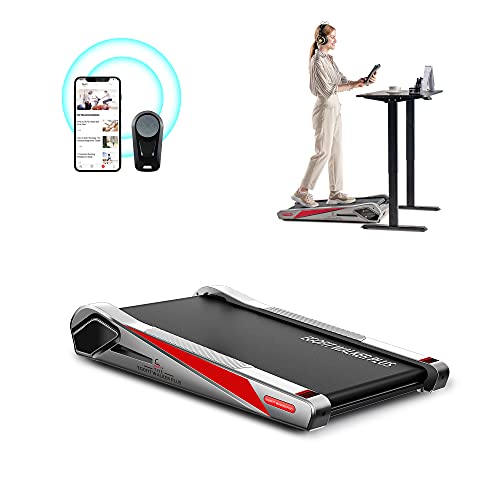
The MERACH W50 is the only pick here with powered incline adjustment. Its 12 percent maximum incline, 400-pound published capacity, and 16.5-inch-wide belt make it the most capable pad in this group. It is also priced close enough to the Z1 to make the decision simple: buy storage or buy incline.
- Speed: 0.6 to 4 mph
- Capacity: 400 lb
- Belt: 41.3 x 16.5 in
- Machine size: 50.2 x 22.2 x 6.1 in
- Weight: 69.2 lb
- Control: Remote and app
The penalty is bulk. At 69.2 pounds, this isn’t a machine most people will happily roll out twice a day, and a six-inch deck changes the required desk height. The 400-pound rating is encouraging, but it doesn’t make this commercial equipment. MERACH’s under-45 dB figure is a manufacturer claim, not an independent result.
Who it’s for: Buyers who want meaningful incline, a wider belt, and a larger capacity margin. Who should skip it: Anyone who must lift the pad, store it vertically in a tight closet, or use a desk with limited height adjustment.

One Model to Skip: WalkingPad A1 Pro at Full Price
The WalkingPad A1 Pro isn’t inherently bad. It has the same useful folding concept that makes the Z1 appealing. The problem is value. At typical full price, it often costs substantially more while retaining a modest speed ceiling and a 220-pound limit.
Buy it only if a real sale puts it close to the Z1 and its specific dimensions suit your space better. A familiar brand name and a nicer remote don’t justify a large premium for most desk walkers.
Walking Pad Buying Guide
Measure the Entire Storage Route
Measure the operating space, then measure every doorway, desk leg, sofa gap, and turn between that space and storage. Wheels help only while they touch the floor. A 69-pound machine is manageable on a smooth floor and miserable across a threshold or up stairs.
If storage is the deciding issue, the Z1’s folding deck earns its premium. If the pad will remain under one desk, a rigid model is simpler and usually cheaper. A tidy cable-management route also keeps the treadmill cord away from chair casters and moving desk legs.
Leave a Weight-Rating Margin
Don’t treat the maximum rating as a target. A useful rule is to leave at least 20 to 30 pounds between your body weight and the published maximum. Ratings don’t tell you how the motor, frame, and belt behave after months of use near the limit.
Belt Length Matters More Than App Features
A 35-inch belt can work at a slow desk pace, but it gives a tall user little room for distraction. Longer belts are more forgiving when you glance at a second monitor or reach for the mouse. Wider belts help too, although they increase the overall machine width.
Plan the Desk Around the Deck
Add the deck height to your normal standing elbow height. A six-inch incline pad may push a short desk beyond its comfortable range. If replacing the desk is unreasonable, a standing desk converter can sometimes add the needed range, but check stability before typing while walking.
A pad also removes the soft surface under your feet. On standing-only blocks, step onto a supportive anti-fatigue mat instead of leaving the treadmill running as a platform.
Read the Return and Warranty Terms
Walking pads are heavy, so a return that requires buyer-paid freight can erase any bargain. Check the return window, restocking language, who pays shipping, and whether the warranty is handled by the brand or marketplace seller. Keep the box until you know the belt tracks correctly and the machine fits your routine.
Walking Pad vs Treadmill: Which Should You Buy?
A walking pad is a space-saving tool for low-speed movement. A conventional treadmill is exercise equipment built around a larger motor, longer belt, handrails, and higher speed. They overlap at a brisk walk, but they aren’t interchangeable.
Choose a walking pad if your main goal is adding movement during email, reading, meetings, or television. The low deck fits under a standing desk, and most models can roll beneath furniture. The tradeoff is a shorter belt, no fixed rails, limited incline, and a duty cycle that may not suit continuous use. Typing also gets less accurate as speed rises, so desk walking is usually a one-to-two-mph activity.
Choose a treadmill if you intend to run, train at varied inclines, use structured workouts, or rely on the machine as your primary cardio equipment. A longer deck and handrails are safer when speed increases. The larger frame is inconvenient, but that mass is part of what makes a treadmill steadier and more durable.
If you have room for only one machine, be honest about the activity you will actually do. A compact pad used four days a week beats a treadmill that becomes a clothes rack. A proper treadmill is the better purchase if removing running from the plan would feel like a compromise. A manual walking pad is another niche option, but its curved, self-powered belt demands more effort and is usually worse for quiet computer work.
Are Walking Pads Worth It?
A walking pad is worth it when it removes a specific barrier: bad weather, a long workday, or no safe lunchtime route. It isn’t worth it as an aspirational object with no permanent place in your routine. If pulling it from storage takes ten minutes, enthusiasm usually loses.
Start with short blocks and alternate walking, sitting, and standing. The Canadian Centre for Occupational Health and Safety recommends changing position and avoiding prolonged standing rather than treating one posture as perfect. The same practical advice applies here. Movement variety is the benefit, not walking through every minute of the workday.
The financial test is straightforward. If a budget Q2 gets used for twenty minutes on most weekdays, it’s cheap home-office equipment. If a premium incline pad sits upright in a closet, its feature list doesn’t rescue the purchase.
Best Walking Pads in Canada
Canadian availability changes the value order. Importing a US treadmill can mean freight charges, difficult returns, and warranty confusion, so these are models with Canadian retailer links. Confirm the seller, delivery, and return terms before ordering. Prices below are in Canadian dollars.
| Model | Checked price | Availability note | Product details |
|---|---|---|---|
| WalkingPad Z1 | Check current price | Check retailer | See card below |
| DeerRun Q2 incline | Check current price | Check retailer | See card below |
| UREVO 2-in-1 walking pad | Check current price | 0.6 to 4 mph | See card below |
| MERACH NovaWalk W50 | Check current price | 12 percent auto incline | See card below |

WalkingPad Z1 Foldable Walking Pad Treadmill for Home,Compact Design
Price and availability may change.
View Current Price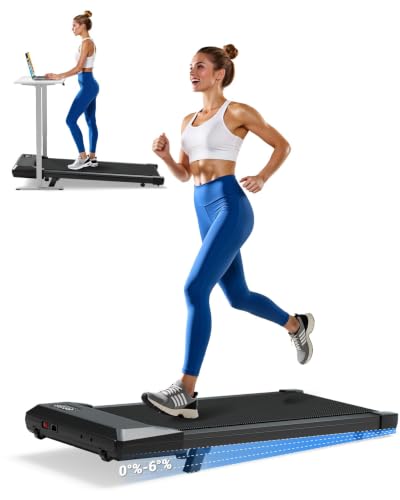

MERACH W50 Walking Pad with 12% Auto Incline, 400lbs Capacity, 3.5 HP Motor
Price and availability may change.
View Current PriceThe Canadian Z1 is still the storage pick, while the Q2 offers the strongest entry price. The W50 can carry a Canadian premium, but buying domestically gives you a clearer delivery and return path. Check the seller name and return terms at checkout because Amazon inventory can rotate between sellers without changing the product page.
Frequently Asked Questions
What is a good walking pad speed while working?
Most people should begin around 0.8 to 1.2 mph. That’s slow enough for reading and light typing. Increase the pace only after you can stay centered on the belt without watching your feet.
Can a walking pad go on carpet?
Only if the manufacturer permits it and the surface is firm. Thick carpet can restrict ventilation and make the machine unstable. A suitable equipment mat protects the floor, reduces movement, and keeps fibers away from air openings.
Can I store a walking pad vertically?
Do so only when the manual explicitly allows it. Some models can leak lubricant or put stress on trim when stored upright. A wall strap can prevent tipping, but it doesn’t make unsupported vertical storage manufacturer-approved.
How long should I use a walking pad each day?
There’s no universal target. Begin with ten-to-twenty-minute sessions, take breaks, and follow the machine’s duty-cycle instructions. Pain, dizziness, or unusual fatigue is a reason to stop and seek appropriate medical advice.
Bottom Line
The WalkingPad Z1 is the best walking pad for a home office where storage is the hard part. Its folding deck is a real advantage, and the longer belt is easier to live with than the tiny decks common at the budget end. The DeerRun Q2 is the smarter first purchase if you have floor space and want to test the habit without risking much money.
Buy the MERACH W50 only if powered incline and the wider belt justify its weight. Buy the Egofit only if fixed incline and the shortest footprint justify its price. For everyone else, spend less, measure carefully, and keep the box until you know the machine belongs in your routine.
Check the WalkingPad Z1 on Amazon.com or check the DeerRun Q2 on Amazon.com.