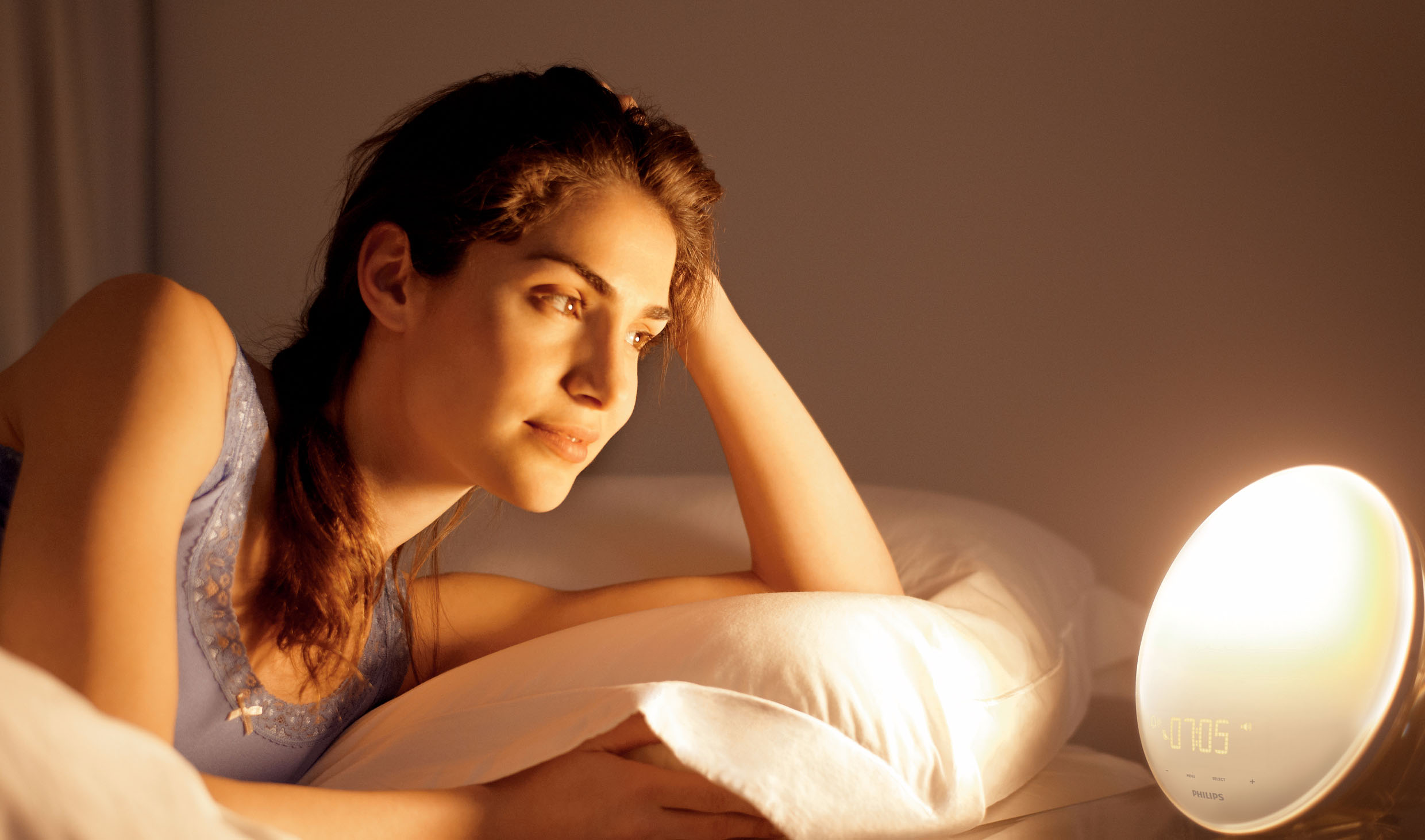
A sunrise alarm clock is most useful when it starts brightening the room before an audible alarm: the Philips SmartSleep HF3520/60 is the best overall pick, while the Lumie Bodyclock Rise 100 is the simplest no-app choice. The ecozy E80S and Dreamegg Sunrise 1 are the lower-cost picks. Clocks fall back on Sunday, November 1, 2026 in most of Canada and the United States, so the morning light arrives earlier by the clock at first, then keeps getting later as winter approaches. A wake up light won’t make getting out of bed delightful, but it can make a dark room feel less abrupt.
I didn’t sleep-test these clocks. I compared current Canadian Amazon Creators API records with manufacturer specifications for brightness, sunrise duration, display dimming, sounds, radio, power, app requirements and size. Philips is the only pick here whose manufacturer publishes a maximum lux figure. That matters because words such as “bright” aren’t a measurement.
This page contains affiliate links. If you buy through these links, we may earn a small commission at no extra cost to you. As an Amazon Associate I earn from qualifying purchases. Full disclosure.
Table of Contents
- Sunrise alarm clock comparison
- Best overall: Philips SmartSleep HF3520/60
- Simplest no-app pick: Lumie Bodyclock Rise 100
- Best sounds and routines: Hatch Restore 3
- Best adjustable sunrise: Lumie Bodyclock Shine 300
- Best compact pick: Dreamegg Sunrise 1
- Best smart controls: ecozy E80S
- How long should sunrise simulation last?
- Sunrise alarm clock vs light therapy lamp
- How to choose a wake up light
- Who should skip this category
- How I chose these picks
- Sunrise alarm clock FAQ
- The Short Version
Don’t want to read the whole article? Here are our quick picks.
1Best overall Philips SmartSleep HF3520/60. Measured brightness, adjustable dawn and FM radio.
2Simplest no-app Lumie Bodyclock Rise 100. Simple app-free light with a fixed dawn.
3Best sounds Hatch Restore 3. Strong sounds, routines and phone-free bedside controls.
4Best compact pick Dreamegg Sunrise 1. Compact body, app-free controls and 29 sounds.
As an Amazon Associate I earn from qualifying purchases.
Sunrise alarm clock comparison
| Pick | Brightness and sunrise | Sound and wind-down | Display and power | App or subscription | Buy |
|---|---|---|---|---|---|
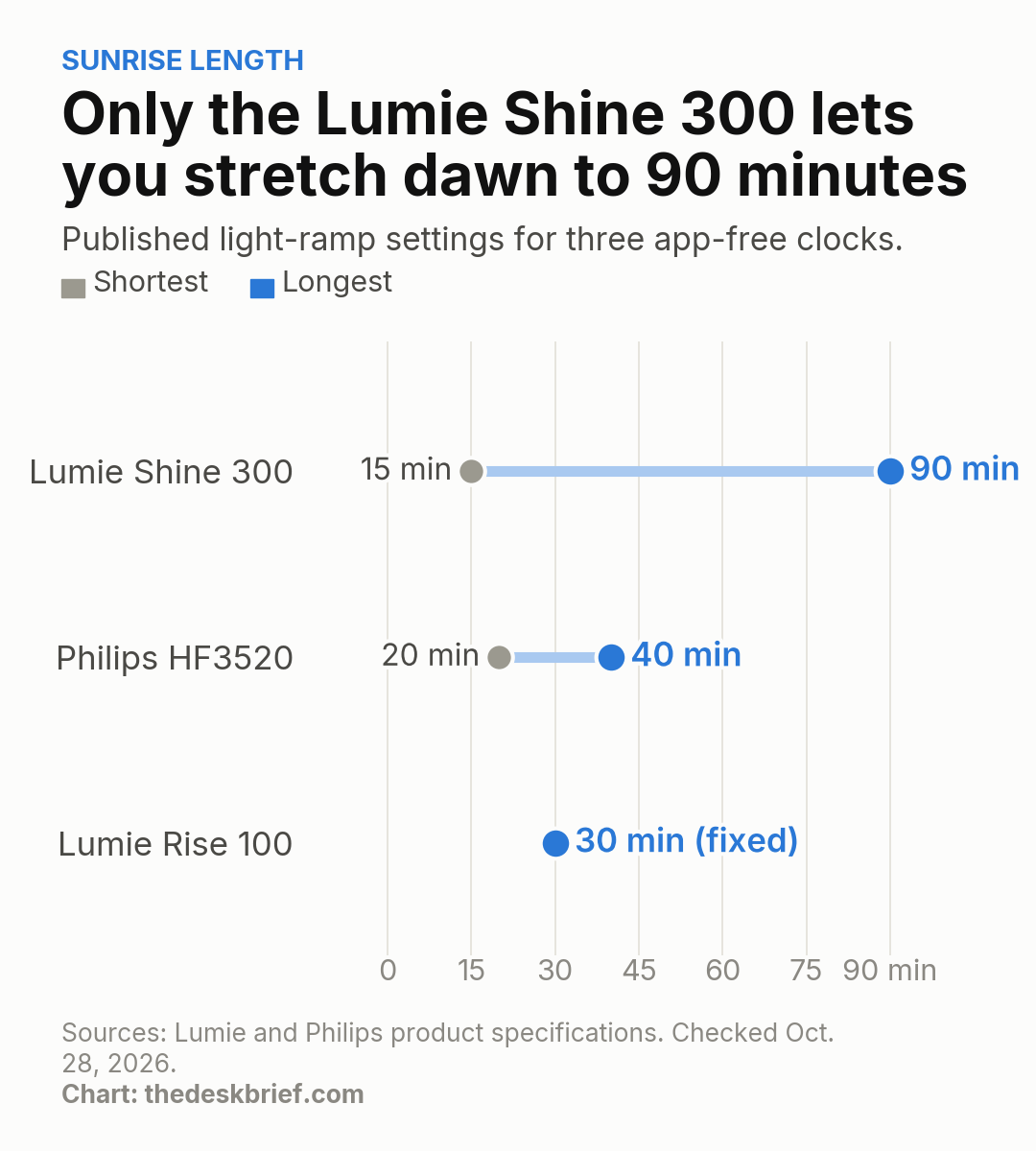
| Philips HF3520/60 | 300 lux; 20 to 40 min | 5 sounds, FM; sunset mode | Display can turn off; plug-in; clock backup | Neither | Amazon |
| Lumie Rise 100 | Lux not published; fixed 30 min | Optional beep; 30-min sunset | Auto-dim or off; plug-in; time backup | Neither | Amazon |
| Hatch Restore 3 | Lux and numeric range not published | Large included library; routines | Clock can stay off; plug-in | App and Wi-Fi; Hatch+ optional | Amazon |
| Lumie Shine 300 | Lux not published; 15 to 90 min | 15 sounds, FM; timed sunset | Auto-dim or off; plug-in; time backup | Neither | Amazon |
| Dreamegg Sunrise 1 | Lux and numeric range not published | 29 sounds; 9 light colours | Dimmable light; plug-in USB-C cable | Neither | Amazon |
| ecozy E80S | Lux not published; adjustable dawn | 7 nature sounds, FM; sunset mode | Display off setting; plug-in; settings backup | EcozyHome and Alexa; no subscription stated | Amazon |
Best overall: Philips SmartSleep HF3520/60
Amazon.ca pricing and availability were refreshed November 05, 2026 at 10:06 AM EST. Product prices and availability are accurate as of the date/time indicated and are subject to change. Any price and availability information displayed on Amazon.ca at the time of purchase will apply to the purchase of this product.
The Philips HF3520/60 is the safest recommendation because Philips publishes the details other brands leave vague. Its 20 brightness levels reach 300 lux, the highest manufacturer-stated lux figure among these picks. The light changes from red through orange to yellow over an adjustable 20 to 40 minutes. Five wake sounds, FM radio and two alarms cover the basics without an app.
The display has four brightness levels plus off, and the clock retains time for four to eight hours during a power interruption. That backup doesn’t turn the lamp into a battery alarm, so keep a phone alarm if outages are common. The main drawback is age: this is a broad, 7.8-inch lamp with only five built-in sounds, and the tap-to-snooze control may be too inviting for committed snoozers.
Simplest no-app pick: Lumie Bodyclock Rise 100
The Lumie Bodyclock Rise 100 is the entry-level branded choice. It runs a fixed 30-minute sunrise, lets you choose the final light intensity and can add an optional beep at the end. At night, the lamp fades over 30 minutes to darkness or a nightlight. Its light-sensitive clock display dims automatically and can switch off entirely.
This is a no-app, no-subscription sunrise alarm clock with simple bedside controls. It is also deliberately sparse. There is no FM radio, no library of nature sounds and no choice of sunrise duration. Lumie doesn’t publish a lux value, so I can’t claim it matches the Philips for room-filling brightness. Buy it for a basic light-first alarm, not as a sound machine.
Best sounds and routines: Hatch Restore 3
The Hatch Restore 3 earns its place through sound and routine control, not published light output. You build a sunrise alarm and wind-down sequence in the Hatch Sleep app, then use the large top button and separate light control without picking up the phone each night. The clock can remain dark until you tap it for the time. Hatch includes a substantial set of sleep sounds, alarm sounds, lights and sunrise options with the device.
Hatch+ is optional, not required. It unlocks a much larger premium content library and more elaborate routines, while the core sunrise alarm, light options and included sounds continue without it. The catches are still meaningful: setup requires the app, ongoing use requires Wi-Fi and wall power, and Hatch doesn’t publish a lux value. If you resent accounts and subscriptions on principle, choose Philips, Lumie or Dreamegg.
Best adjustable sunrise: Lumie Bodyclock Shine 300
The Lumie Bodyclock Shine 300 offers the widest published timing range here: 15 to 90 minutes for both sunrise and sunset. You can choose final light intensity, 15 wake or sleep sounds, FM radio, daily or weekly alarms and a nightlight. The display dims with room light and can go fully dark. It is app-free and keeps the time for 30 minutes without power.
The Shine 300 suits someone who wants to tune the ramp instead of accepting one factory interval. It is not the obvious choice for a tiny nightstand at 8.3 inches wide, and its menu has more settings to work through than the Rise 100. Lumie publishes roughly 350 lumens for its Bodyclock range but not a bedside lux figure, so that number isn’t directly comparable with Philips’ 300 lux.
Best compact pick: Dreamegg Sunrise 1
The Dreamegg Sunrise 1 combines a dawn light with 29 sound profiles in a body about 5.9 inches across and 2.9 inches deep. It uses tactile controls, needs no app or Wi-Fi and includes a USB-C cable plus wall adapter. Nine colour profiles and a 5-to-180-minute sleep timer make it more flexible at bedtime than its small size suggests.
This is the travel pick only in the “fits in luggage” sense. It must remain plugged in, so it isn’t a camping alarm or a battery backup. Dreamegg also doesn’t publish maximum lux or a numeric sunrise-duration range on the current product page. Skip it if measured brightness, FM radio or outage operation matters more than size and sound selection.
Best smart controls: ecozy E80S
The ecozy E80S is the smart-home option. Ecozy’s official page documents EcozyHome app control, 2.4 GHz Wi-Fi, Alexa support, multiple alarms, FM radio, seven nature sounds, physical controls and a display that can turn fully off. A small backup battery preserves settings, but the light and audible alarm still need wall power.
The appeal is setting weekday and weekend alarms from bed rather than stepping through clock menus. The downside is dependence on an older app-connected model, plus no manufacturer-published lux figure. I also couldn’t verify an orderable exact US offer through the Creators API, so the Canadian link has no US routing. Choose this for app and voice control, not because “smart” automatically makes it a better alarm.
How long should sunrise simulation last?
Start with 30 minutes and adjust after several mornings. A longer ramp can begin while you’re still deeply asleep, while a short ramp may feel little different from switching on a lamp. Distance matters too. Put the clock where its light reaches your face without forcing you to stare directly at it, then reduce intensity or increase distance if you wake too early.
Sunrise alarm clock vs light therapy lamp
A wake up light simulates dawn before your alarm time. It is designed to make the transition from a dark room to morning more gradual. A 10,000-lux light therapy lamp is a different product: it delivers much brighter light during a deliberate daytime session. Don’t treat the categories as interchangeable, and don’t use either as a substitute for medical advice.
How to choose a wake up light
Brightness comes first. A manufacturer-stated lux figure is more useful than a stack of brightness levels, though the measurement distance also matters. Philips publishes 300 lux for the HF3520/60. Lumie explains that it generally describes the Bodyclock range in lumens rather than bedside lux, so those numbers can’t be compared directly.
Keep an audible backup. Light alone may not wake a deep sleeper, especially if the lamp is blocked by bedding or placed across the room. Every pick here can finish with sound. Check whether “backup” means an audible alarm after the dawn ramp or only memory that preserves the clock during an outage. None of these lamps provides full battery-powered sunrise operation.
Make the display disappear. A bright clock face can undo the point of a calm bedside setup. Philips and both Lumie models can turn the display off, Hatch can hide the time until tapped, and ecozy offers an off setting. Also decide whether you want FM radio or a sound library. The Rise 100 has only a beep, while Hatch and Dreamegg put much more emphasis on audio.
Be honest about apps. Hatch needs its app and Wi-Fi for setup and customization. Ecozy adds app and Alexa control. Philips, Lumie and Dreamegg work from physical buttons with no subscription. That is less glamorous and often nicer at six in the morning.
Who should skip this category
Skip a sunrise alarm clock if your schedule changes daily, your nightstand faces away from the bed or you need a truly portable battery alarm. A smart bulb on a schedule may cover the light portion, though it usually lacks the integrated audible fallback. People who already wake easily to a normal alarm may get more winter comfort from a heated blanket, under-desk foot warmer or small office heater. Our heater guide also explains the safety tradeoffs of warming the room instead.
How I chose these picks
I required a currently orderable Canadian Amazon offer returned by the Creators API on October 28, 2026 and an official manufacturer page for the exact model. The six clocks then had to fill distinct jobs rather than repeat the same round lamp: measured brightness, basic value, sound and routines, adjustable duration, compact travel and smart control. Exact US routing appears only where the US API returned the same product and configuration.
I excluded Hatch Baby as a main pick even though its Canadian offer was verified. It is a colour-based time-to-rise and sound routine device, not a manufacturer-described gradual dawn simulator. That can make sense for a child, but it shouldn’t be disguised as the same thing. I also avoided quoting marketplace brightness claims when the manufacturer did not publish a comparable figure.
Shopping for someone else this season? The Christmas gifts Canada guide rounds up useful desk and tech picks.
Sunrise alarm clock FAQ
The Short Version
The Philips SmartSleep HF3520/60 is the best sunrise alarm clock for most dark bedrooms because it combines a published 300-lux maximum, adjustable 20-to-40-minute dawn, FM radio and a display that turns off. Choose the Lumie Rise 100 for the simplest no-app model, Hatch Restore 3 for sounds and routines, Lumie Shine 300 for a much wider timing range, Dreamegg Sunrise 1 for compact travel, or ecozy E80S for app and voice control.