
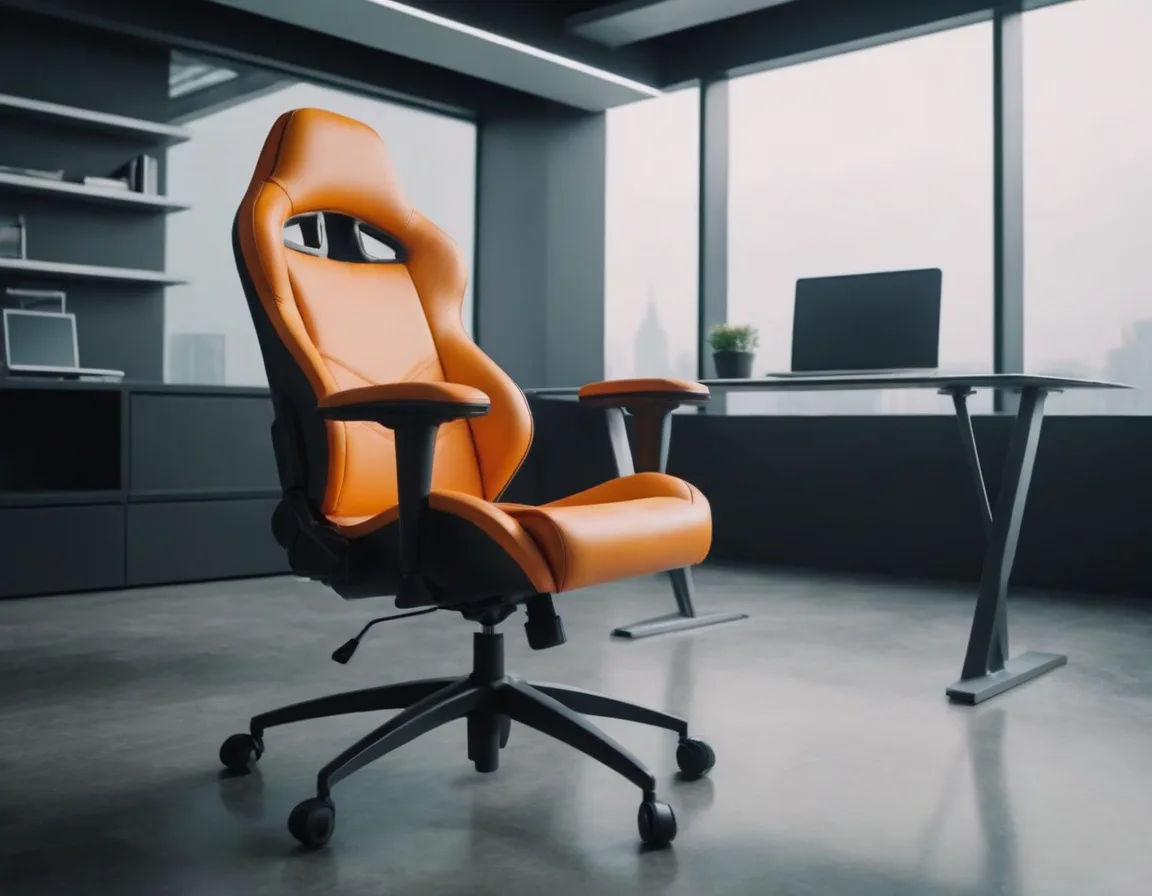
If you’re searching for the best ergonomic chairs under CA$300 (US$214), you’re in the right place. If you’re spending eight hours a day in a chair, that chair is arguably one of the most important pieces of gear at your desk. It also happens to be the item where the gap between marketing claims and actual build quality is the widest and where the “budget ergonomic chair” category has the most misleading content online.
Currency note: Canadian dollar equivalents use the Bank of Canada daily average of 1 USD = 1.4014 CAD on July 17, 2026. Converted amounts are approximate; the original US price is shown in brackets.
This guide is built around a specific question: if you have CA$300 (US$214) or less to spend, what should you actually buy? Not “here are ten chairs we ranked 1-10.” Not “here’s every chair Amazon paid us to promote.” A real framework for how to spend that money well, plus specific chairs that hold up to scrutiny.
One upfront honesty check: under CA$300 (US$214) gets you a genuinely good chair, but not the best chair. If you work full-time from home and your budget can stretch, CA$500-800 (US$357-571) buys a noticeably better experience. If CA$1,000 (US$714)+ is on the table, a used Herman Miller Aeron or Embody from Kijiji, Ebay, or Facebook Marketplace will outlast and outperform anything in this guide. With that said, under CA$300 (US$214) is a legitimate budget (for some) and there are good options in it.
Table of Contents
What actually matters when choosing ergonomic chairs under CA$300 (US$214)
Chair marketing loves to throw around terms like “lumbar support,” “breathable mesh,” and “premium construction.” Most of that is noise and distract from the facts. The features that genuinely separate a good budget chair from a bad one:
Adjustable lumbar support. Not “built-in lumbar pad” those are cosmetic. You want lumbar support whose height and/or firmness you can adjust to match your spine. If a chair’s product page doesn’t explicitly mention lumbar adjustability, assume it doesn’t have it.
Seat depth adjustability (also called “slider”). This matters if you’re shorter or taller than average. A fixed-depth seat that’s too long will cut off circulation behind your knees; too short won’t support your thighs. Most chairs under CA$200 (US$143) don’t have this. Above CA$200 (US$143), many do.
Adjustable armrests. At the minimum, height-adjustable. Better chairs offer “3D” (height + width + pivot) or “4D” armrests (all three plus depth). 3D is the sweet spot for budget chairs, the jump to 4D is usually not worth the price difference unless you type in unusual positions.
Seat tilt/tension adjustment. Good chairs let you lock the backrest at your preferred recline, or allow it to rock with adjustable resistance. A chair that only locks “fully upright” or “fully reclined” is going to feel wrong most of the day.
Weight capacity with headroom. A chair rated to exactly your weight will feel flimsy and wear out fast. Look for at least 50 pounds of headroom above your body weight.
Warranty. This is the hidden tell of budget chair quality. Good budget brands offer 3-7 year warranties. Cheap brands offer 12 months or nothing. If a company won’t stand behind a chair for three years, they know something you don’t.
What you can safely ignore and what you should pay attention to
- Gaming chair styling. Racing-seat shapes, leather-like upholstery, and RGB lighting are NOT ergonomic features, they’re aesthetics. Many “gaming chairs” have worse ergonomics than office chairs at the same price.
- “Premium materials” language. Real premium materials have specific names (genuine leather, cast aluminum, polypropylene mesh). Vague language usually means it’s not premium.
- Influencer endorsements. Budget chair brands pay heavily for YouTube and Instagram coverage. Independent reviews from Wirecutter, Consumer Reports, and hands-on testing sites (not unboxing videos) are more reliable.
- “Ergonomically certified.” There’s no universal ergonomics certification. The phrase is marketing filler.
Who should skip the sub CA$300 (US$214) category entirely
Before we get to specific chair recommendations, some honest guidance about who should spend more:
- You’re over 6’3″ or under 5’2″, or over 250 lbs. You need a chair with wider adjustment ranges than budget options provide. Budget chairs are designed around median body dimensions.
- You have chronic back, neck, or hip problems. A chair with a real warranty and a return policy you can actually use is worth more than saving CA$200 (US$143). Brands like Branch, Steelcase, and Herman Miller (through authorized resellers with generous trial periods) are better investments.
- You work full-time from home and expect to for years. Amortized over five years, a CA$600 (US$428) chair at CA$120 (US$86)/year is cheaper than replacing a CA$200 (US$143) chair every 18 months. Budget chairs do wear out faster.
- You can find a used premium chair locally. A used Herman Miller Aeron or Steelcase Leap in good condition on Kijiji or Facebook Marketplace typically costs CA$300-500 (US$214-357) and will outlast any new budget chair.
The decision framework for best ergonomic chairs under CA$300 (US$214)
Assuming you’re staying under CA$300 (US$214), answer these questions in order:
Most people asking this question are replacing either a kitchen chair or a basic office chair that was never designed for extended sitting. The jump to a purpose-built ergonomic chair (even a budget one) is significant. You don’t need to spend CA$500 (US$357)+ to get a genuine ergonomic chair. The under-CA$300 (US$214) category has real options, but they require knowing what to prioritize.
1. How many hours per day will you actually sit in it?
- Under 4 hours: the bar is low. Almost any chair with adjustable height and a basic lumbar pad will be fine. Save money.
- 4-6 hours: you want adjustable lumbar, height-adjustable armrests, and a decent warranty. Roughly CA$150-220 (US$107-157) range.
- 6-10+ hours: you need real ergonomic adjustability: lumbar height, seat depth (if your height is non-average), 3D armrests. Spend closer to CA$300 (US$214) to get these features.
2. Do you run hot?
- If yes, mesh back is genuinely better than foam/cushion. Air circulation through mesh prevents the sweaty-lower-back feeling after a few hours.
- If no, cushioned seats with partial mesh (common on M18-style chairs) tend to feel more comfortable for most users and don’t compress over time the way cheaper all-mesh chairs sometimes do.
3. Is anyone else going to use it?
- If yes (shared home office, partner with different proportions): adjustability matters more. Spend toward the higher end for seat depth and 3D armrests.
- If no: you only need adjustability that matches your body. Some “one-size” chairs fit some bodies extremely well and others poorly.
Best ergonomic chairs under CA$300 (US$214) worth considering
These are the models that come up repeatedly in independent reviews, not just paid affiliate content. I’ve organized by budget tier and noted who each one suits.
Under CA$200 (US$143) tier
Sihoo M18 roughly CA$160-200 (US$114-143)
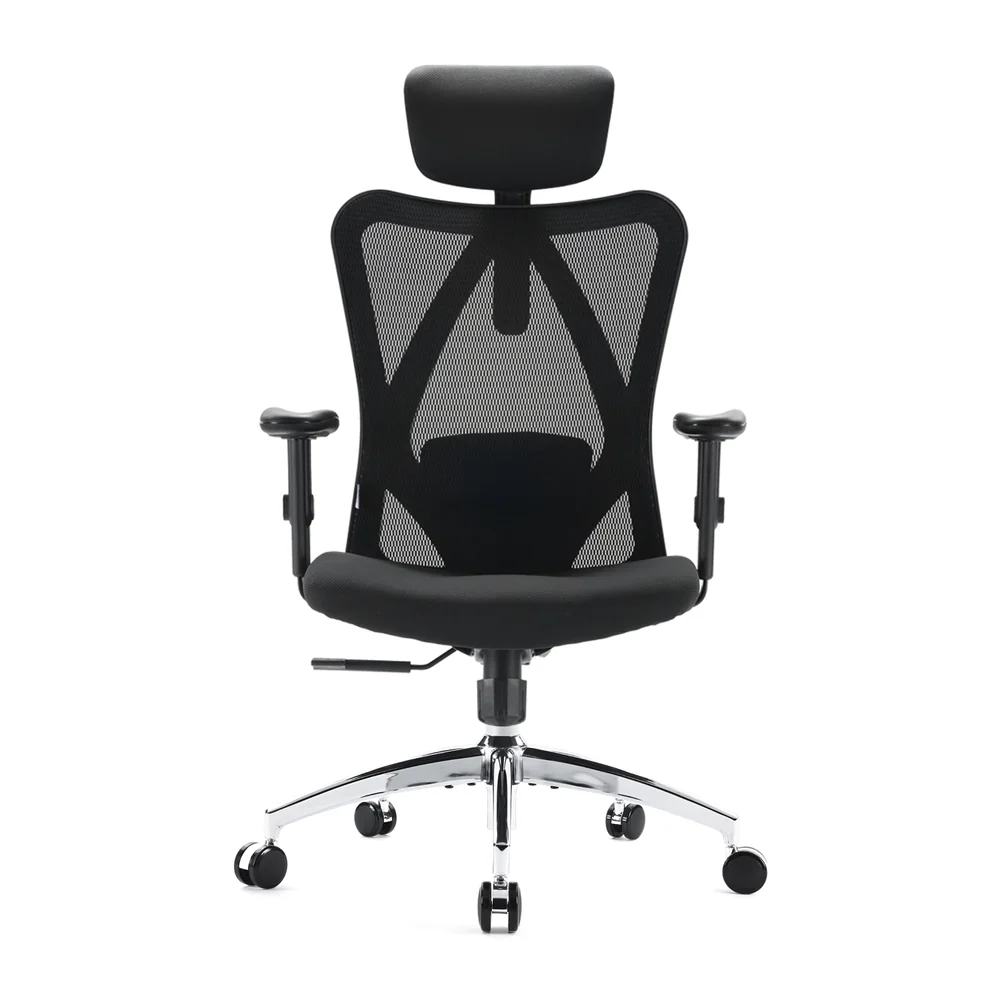
The budget benchmark, and genuinely good for the price. Supportive high-density foam seat, mesh back, adjustable lumbar, 3D armrests, and a recline lock. The W-shaped seat cushion is surprisingly comfortable for long sessions.
Who it suits: average-height users (5’4″ to 6’1″), 4-6 hours of daily use, people who prefer cushioned seats over full mesh.
Trade-offs: the adjustment mechanisms are stiff, once you set it, you won’t want to adjust it often. Wheels are rougher than on pricier chairs. Not available in “big and tall” dimensions easily.
Why it’s included: it’s the one chair in this price range that independent reviewers consistently rate well, not just affiliate-driven ones. Real testing sites praise its lumbar and overall construction.
Sihoo M57 roughly CA$200-250 (US$143-178) (sometimes drops into M18 territory on sale)
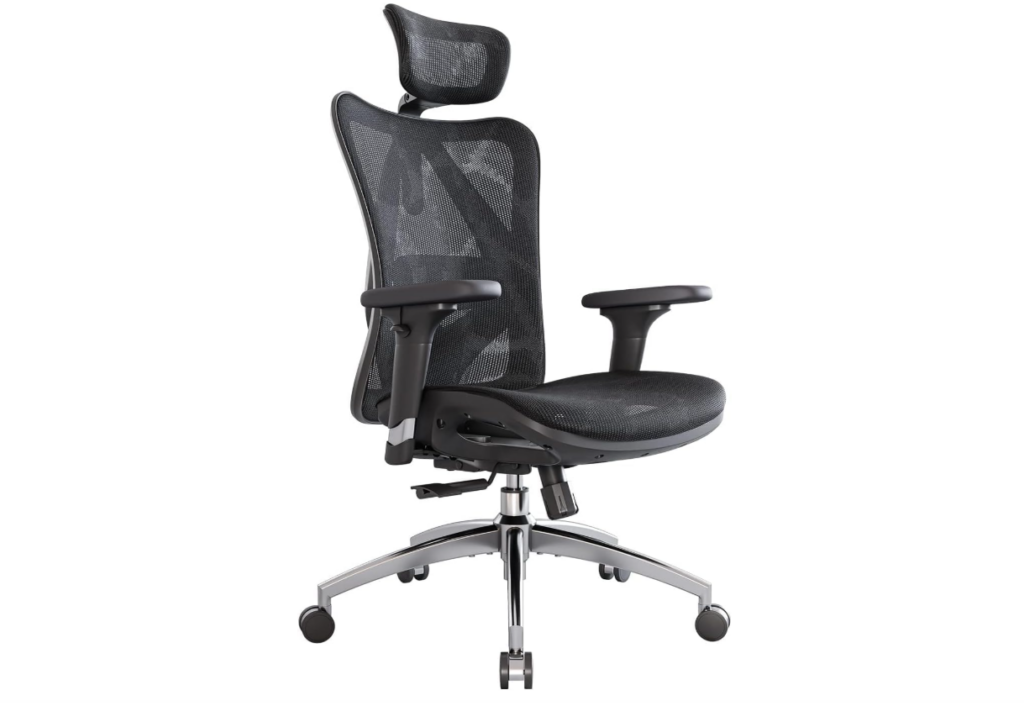
The full-mesh sibling of the M18. Better for hot environments, slightly firmer overall, same warranty. The seat is all mesh rather than foam.
Who it suits: people who run hot, users in warm climates, those who dislike the feeling of foam compressing over time.
Trade-offs: mesh seats feel firmer from day one; some people find them less comfortable than foam for long sessions. Independent reviews are positive but more mixed than the M18.
CA$200-300 (US$143-214) tier
IKEA Markus roughly $270-$300 CAD
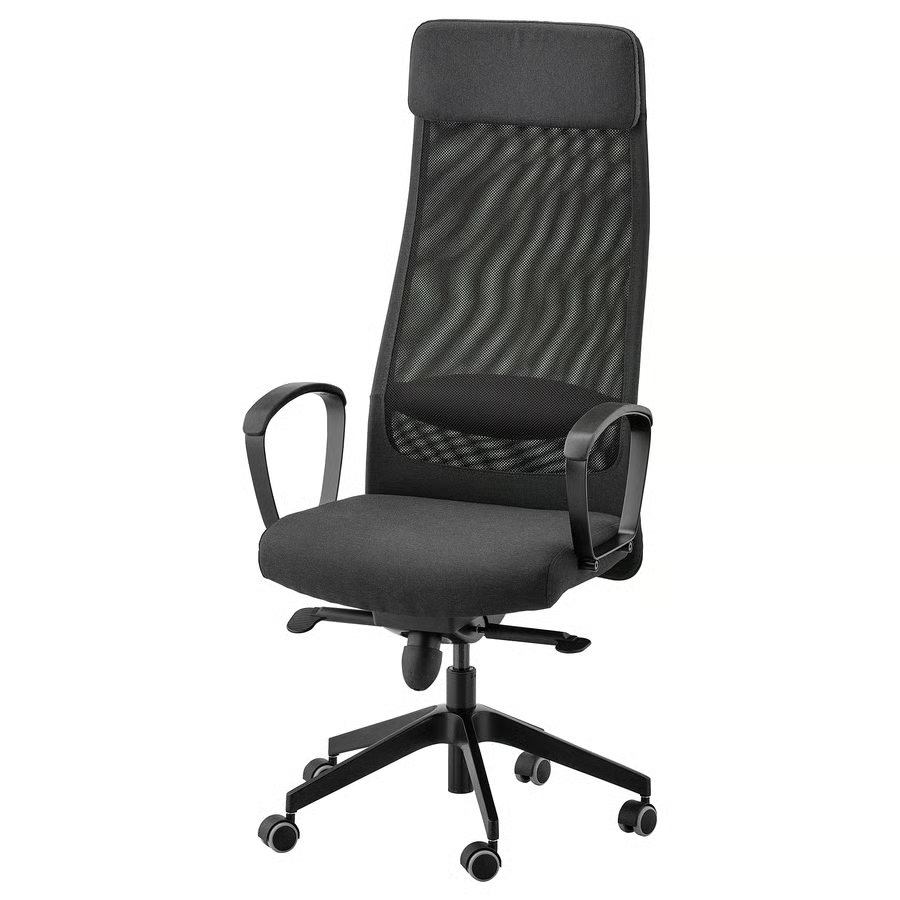
Available at IKEA locations across Canada. Built-in (not adjustable) lumbar, fixed armrests, 10-year warranty. What makes it work is that the ergonomics are “correct” out of the box for typical body sizes, and the build quality far exceeds the price IKEA chairs tend to last.
Who it suits: users of average proportions (the built-in lumbar is positioned well for people roughly 5’6″ to 6’1″), people who don’t need extensive adjustability, anyone who values simplicity and warranty length over adjustability.
Trade-offs: the armrests don’t adjust, which kills it for some users. The lumbar is fixed if it’s not in the right spot for your spine, you’re out of luck. No seat depth adjustment.
Why it’s on the list: the 10-year warranty from IKEA is exceptional, and the chair is available for in-store test-sitting before you buy. That alone makes it worth considering.
Branch Ergonomic Chair (base model) roughly CA$279-299 (US$199-213)
The non-Pro Branch chair has been steadily improving its reputation. Offers adjustable lumbar, 3D armrests, seat slider (depth adjustment), and a 7-year warranty. Build quality is noticeably above the Sihoo tier.
Who it suits: people who sit 6+ hours daily, anyone wanting seat depth adjustment without jumping to CA$400 (US$285)+ chairs, users prioritizing longer warranty coverage.
Trade-offs: the direct-to-consumer shipping experience has mixed reviews; assembly takes longer than IKEA or Sihoo; availability in Canada can be inconsistent.
What about gaming chairs under CA$300 (US$214)?
The gaming chair market (Secretlab, DXRacer, AKRacing, etc.) has chairs in this price range that look impressive but generally have worse ergonomics than the options above. The racing-seat shape constrains hip position, the cushions compress faster, and the “lumbar pillow” approach is inferior to integrated adjustable lumbar. If aesthetics matter more to you than ergonomics, a gaming chair is your call but this is an ergonomics guide, and they don’t make the cut.
When testing any ergonomic chair in person, bring a stopwatch. Sit for 10 minutes without adjusting. A good ergonomic chair should feel comfortable without your needing to shift position frequently. Pay special attention to lumbar support: the ergonomic chair’s lower back cushion should press gently against the curve of your spine without feeling forced.
How to actually test a chair
Buying blind is a gamble. Here’s how to evaluate whether a chair you’re considering will work for you:
For online purchases:
- Confirm the return policy. Chairs sold through Amazon, Branch, and IKEA typically have 30-day returns. Some direct manufacturers offer 100-day trial windows. If the return policy is less than 30 days, look elsewhere you need real time to know.
- Search for reviews from sites that actually test the chair (TechGearLab, Wirecutter, Creative Bloq, TechRadar). Skip the “top 10” affiliate roundups and look for single-chair reviews with lots of photos.
- Check the return shipping policy specifically. Some brands make you pay CA$50 (US$36)+ to ship back a failed chair, which changes the math on whether the trial is worthwhile.
When you receive the chair:
- Sit in it for a full workday (not 15 minutes) before deciding. Chairs feel different at hour six than at minute five.
- Adjust every adjustment the chair offers. If any are stuck, poorly designed, or awkward to reach, that’s a legitimate reason to return.
- Pay attention to soreness the day after, not during. A bad chair often feels fine for a day but causes stiffness or pain the following morning.
How to properly set up your ergonomic chair
Buying the right chair is half the problem; setting it up correctly is the other half. The biggest mistake budget chair buyers make is treating the chair as the only ergonomic variable when the whole desk setup matters.
A correctly-set-up chair includes:
- Height set so your feet are flat on the floor and knees at roughly 90 degrees
- Backrest angled so your hips are slightly higher than your knees
- Lumbar support positioned at the small of your back, not higher or lower
- Armrests at a height where your shoulders can relax (not shrug up to meet them)
- Monitor positioning coordinated with the chair: if your monitor height isn’t right, no chair will fix the neck strain
Also worth factoring in: good cable management around the chair matters because cables that catch on wheels or get run over wear out fast, and chairs on cluttered setups tend to migrate around the room, which defeats the point of adjusting them perfectly.
For independent ergonomic chair testing data, RTINGS.com’s chair reviews and Consumer Reports’ office chair ratings are worth checking before you buy.
Choosing the right ergonomic chair within a tight budget comes down to prioritizing correctly. The best ergonomic chair for most people costs between CA$150 (US$107) and CA$300 (US$214), not because cheaper chairs are always bad, but because that range reliably covers the features that matter: adjustable lumbar support, seat depth control, and height-adjustable armrests. Any ergonomic chair below CA$100 (US$71) tends to compromise on at least one of these.
The bottom line on ergonomic chairs under CA$300 (US$214)
Under CA$300 (US$214), the honest picks are:
- Tight budget, 4-6 hours/day: Sihoo M18 (~CA$180 (US$128)). Solid ergonomics, cushioned seat, reasonable warranty.
- Hot climate or mesh preference: Sihoo M57 (~CA$220 (US$157)). Same category, different seat material.
- Average proportions, want warranty and simplicity: IKEA Markus (~CA$280 (US$200)). Test it in-store; 10-year warranty is rare at this price.
- Full workday every day, want longer-term value: Branch base model (~CA$290 (US$207)). Most adjustability in this tier, 7-year warranty.
If none of these fit your body, proportions, or use case, that’s your sign to either spend more or buy a premium chair used. There is no CA$300 (US$214) chair that works for everyone but for most people, one of the options above will work for years.
This page contains affiliate links. See our affiliate disclosure.
4 thoughts on “The Best Ergonomic Chairs Under $300 (Honest 2026 Guide)”
Comments are closed.