The RAM shortage 2027 warning did not come from a doom-posting blogger. It came from Kwak Noh-Jung, the CEO of SK hynix, in a Reuters interview on July 10, 2026: “We forecast that next year will be the worst year in the industry’s history from the supply perspective.” That is one of the two companies that make most of the world’s DRAM saying, on the record, that the worst part of this price cycle has not happened yet.
If you own a desktop, plan to buy a laptop, or intend to put a GPU in anything before 2028, this lands on your wallet eventually. Here’s what was actually said, why the math behind it holds up, what memory costs in Canada as of this week, and the least painful way to plan around it.
Table of Contents
- Who said what, and why it matters
- Why the RAM shortage 2027 forecast holds up
- What RAM costs in Canada right now
- How to get ahead of it
- Who should buy now, who should wait
- RAM Shortage 2027 FAQ
- The Short Version
Who said what, and why it matters
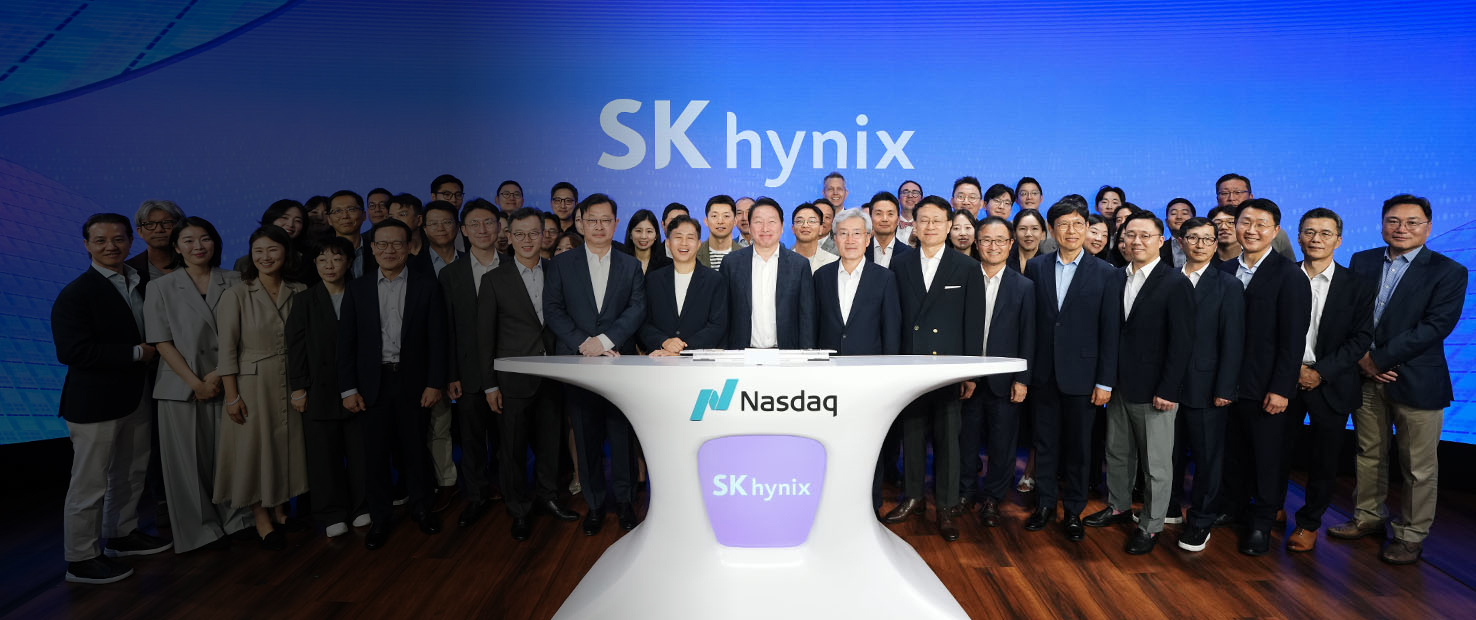
Kwak made his comments the week SK hynix listed American depositary receipts on the Nasdaq, a debut that raised US$26.5 billion. You can read the company’s own framing of the listing on the SK hynix newsroom. The short of his forecast: customer demand for memory will stay above what the industry can produce past 2030, and 2027 will be the single worst year of the gap.
Days later, SK Group chairman Chey Tae-won called current memory prices “abnormally high” at a press briefing and said supply must expand to stop what he called chipflation, including a possible new memory plant in the US, as reported by Tom’s Hardware. His reasoning is the part that matters for regular buyers: AI companies can absorb higher chip costs inside their investment budgets. PC and phone makers cannot, so they pass the increase straight to you.
So the people selling the memory are saying, simultaneously, that prices are too high and that the squeeze gets worse before it gets better. Companies rarely talk down their own pricing for fun. When they do, believe them.
Why the RAM shortage 2027 forecast holds up
The mechanics are simple and unforgiving. The same fabs that make consumer DDR5 also make high-bandwidth memory for AI accelerators, and HBM pays far better. One HBM3E stack contains 16 DRAM dies, which eats roughly the wafer capacity of 16 ordinary DDR5 chips, a detail broken down well by The FPS Review. Every AI order displaces a pile of consumer kits.
The rest of the industry is telling the same story. Micron has indicated it can meet only around 40 to 50% of total customer demand in the coming years, and UBS projects the undersupply lasts until at least the second quarter of 2028. Retooling an HBM line back to consumer DDR5 is slow, and a new fab takes years to build, which is why the RAM shortage 2027 scenario is not something a good earnings quarter can cancel.
I wrote about the front end of this squeeze in my RAM prices buy-or-wait guide earlier this month. The new forecasts move the goalposts: this is no longer a spike to wait out. It is a multi-year plateau with the peak still ahead.
What RAM costs in Canada right now
A year ago a 32GB DDR5 kit sold for under US$100. The same class of kit now sits around US$375 in the US, and Canadian shelf prices are in line with that. These are the lowest in-stock prices my weekly tracker found at Best Buy Canada and Canada Computers on July 13, 2026:
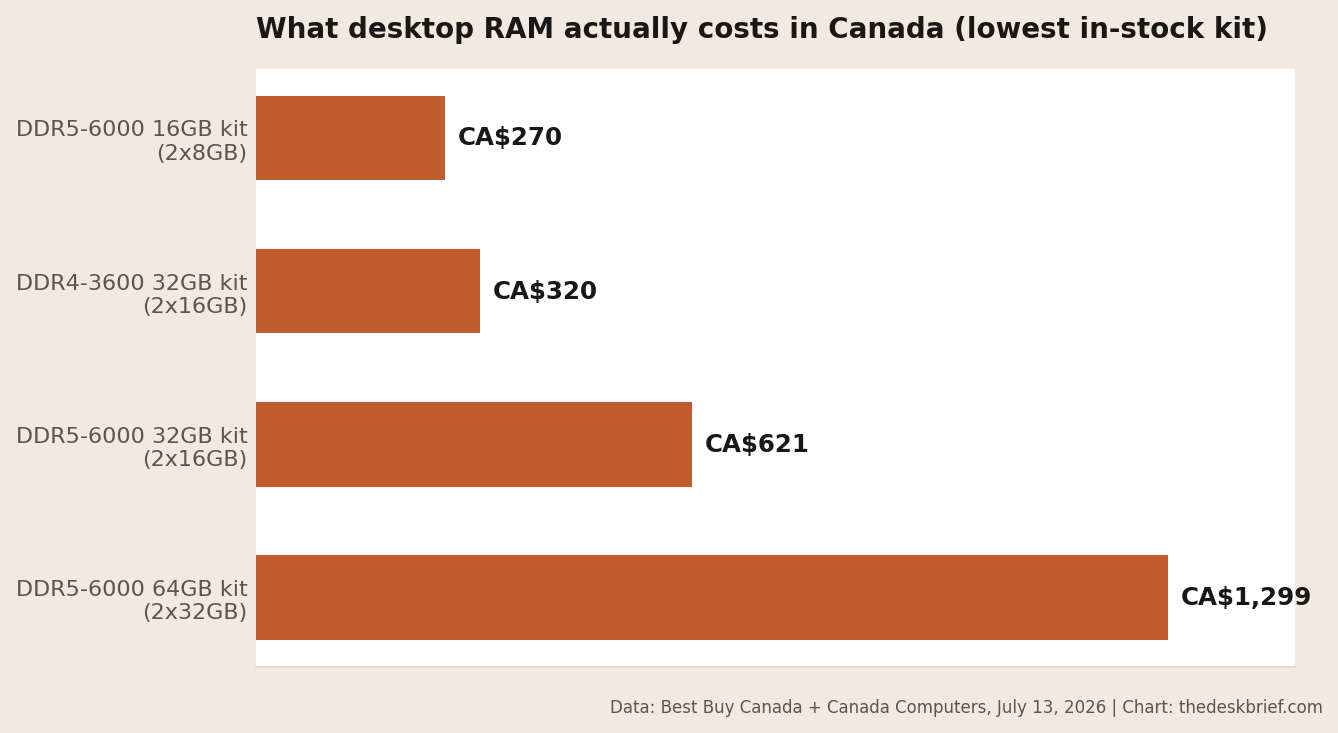
Read that chart again if you’re planning a build: CA$620.99 for 32GB of DDR5-6000, CA$1,299.00 for 64GB. Even last-generation DDR4-3600 is CA$319.99 for 32GB, which would have been an insult in 2024 and counts as a bargain now. I update these numbers every week on the RAM price tracker page, so you don’t have to trust a stale screenshot.
How to get ahead of it
First, decouple the RAM purchase from the build. If a new PC is happening in the next 12 months, buy the memory whenever you catch a dip, not the week you assemble. Kits don’t expire, and in a market where the producers themselves forecast a worsening gap, waiting for the platform choice to settle costs more than committing early to DDR5, which every current desktop platform uses anyway.
Second, buy the right amount instead of a defensive pile. 32GB remains the sweet spot for a work desktop in 2026. Hoarding 128GB because of a shortage headline turns you into part of the shortage, and at CA$1,299.00 per 64GB kit the insurance premium is real money. The exception is anyone running local LLMs: memory capacity is the hard wall there, and if that’s you, the calculus is different enough that I’d point you at the unified-memory machines in my RTX Spark laptop guide rather than a quad-channel desktop money pit.
Third, treat soldered-RAM laptops as a three-year bet. If the memory can’t be upgraded later, spec the machine for the software you’ll run in 2029, not the software you run today. The upgrade you skip at checkout is the one the shortage prices out of reach later.
Who should buy now, who should wait
Buy now if you’re limping along on 16GB and the machine earns your living, if you’re building this year regardless, or if your laptop choice is between RAM tiers and the bigger one costs less than 15% more. All three of those decisions get more expensive on the industry’s own forecast.
Wait if you already have 32GB and the upgrade is a want rather than a bottleneck, or if your workload is browser tabs and office apps that 16GB still handles. Prices being high is not, by itself, a reason to transact. The honest version of this advice: most people reading this should do nothing except stop assuming next year is cheaper.
RAM Shortage 2027 FAQ
Will RAM prices go down in 2027?
Not on any forecast currently public. SK hynix’s CEO expects 2027 to be the worst supply year in industry history, and UBS sees undersupply until at least Q2 2028. Dips within the year will happen; a return to 2024 pricing is not on the table.
How much RAM should I buy for a 2026 build?
32GB for general work and gaming, bought on a dip. Go 64GB only if you run local AI models, heavy VMs, or big video timelines, and price it with clear eyes: that tier currently starts around CA$1,299.00 in Canada.
Is DDR4 a cheaper way around the RAM shortage 2027 problem?
Only partially. DDR4-3600 32GB kits run about CA$319.99 versus CA$620.99 for DDR5, but you’d be buying into platforms at the end of their lives. For a stopgap upgrade of an existing DDR4 machine, yes. For a new build, no.
Did RAM prices really triple?
Roughly, yes. 32GB DDR5 kits that sold for under US$100 in mid-2025 now sit around US$375, and my Canadian tracker shows CA$620.99 as the most affordable in-stock 32GB DDR5-6000 kit this month.
The Short Version
The companies that make memory say 2027 will be their worst supply year ever, demand stays ahead of supply past 2030, and current prices are already “abnormally high” by their own chairman’s admission. Plan purchases around that: buy on dips instead of deadlines, size for three years on anything soldered, and don’t hoard what you won’t use.
The RAM shortage 2027 story will produce a lot of panicked headlines between now and then. The numbers to actually watch are the shelf prices, and those are on the tracker every week.