Samsung Galaxy Watch Ultra 2 is being sold as a smartwatch dive computer, but the dive-computer app isn’t available at launch. Samsung has built the first Galaxy Watch to meet EN13319 and added automatic depth, water-temperature and dive-time readings for August 7. The Mares app with decompression and ascent-and-descent-rate features arrives later in 2026 and costs extra. That makes the Ultra 2 interesting as future backup equipment, but it shouldn’t be your only dive computer.
Last updated: October 19, 2026. The watch is now shipping, and this guide now includes independent battery, heart-rate, sleep, and body-composition testing. The Mares decompression app is still expected later in 2026.
Canadian availability: compare current Galaxy Watch Ultra2 colours on Amazon.ca .
Disclosure: This page contains affiliates. If you buy through them, The Desk Brief may earn a commission at no extra cost to you.
Samsung Galaxy Watch Ultra2, Titanium Silver, 47mm LTE Smartwatch
Price and availability may change.
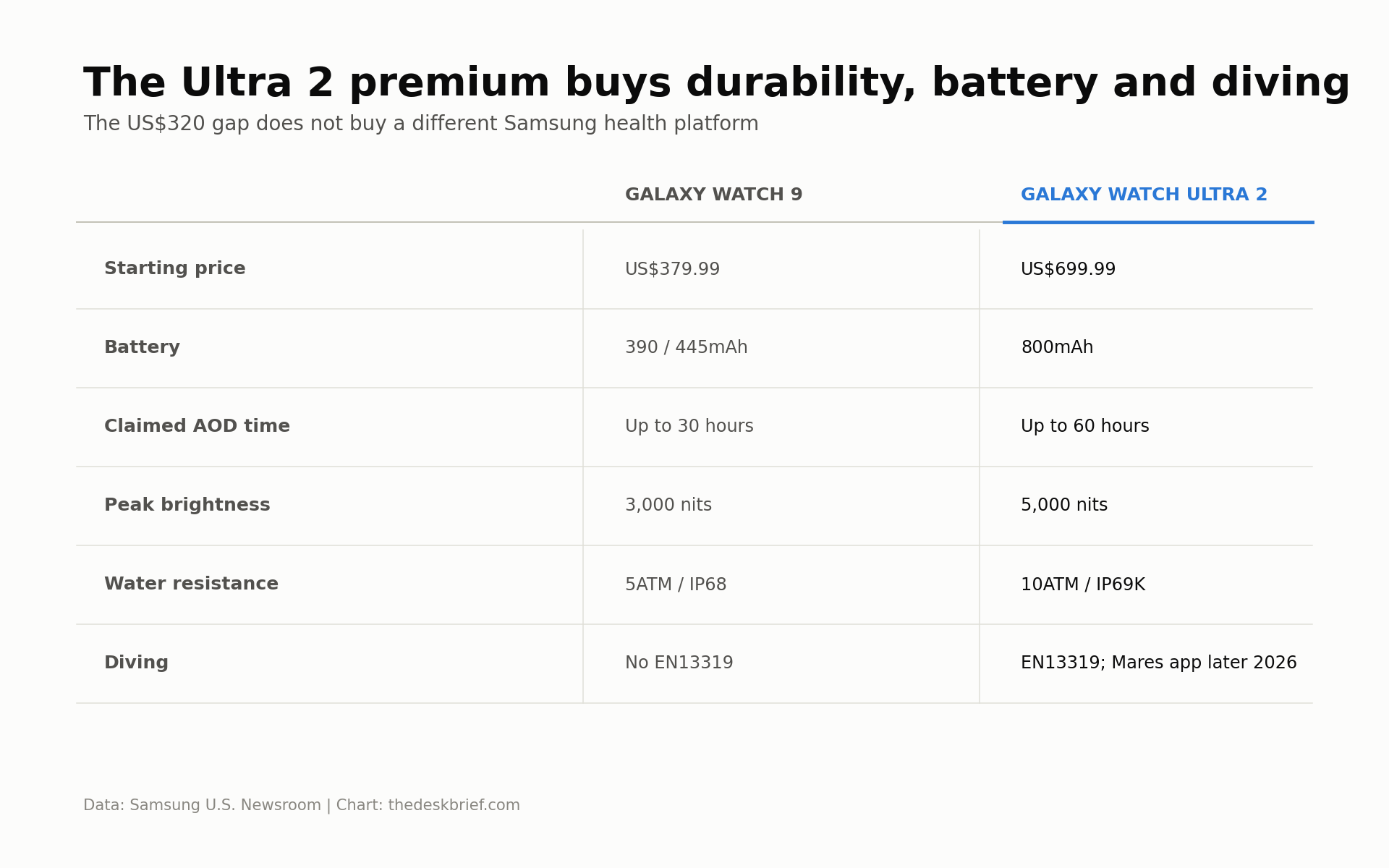
View Current PriceThe Ultra 2 costs US$699.99, US$50 more than the original 2024 model. Pre-orders opened on 22 July 2026 and general availability began on August 7. Even the new Samsung Galaxy Card only makes that price easier to accept for buyers who can earn the launch bonus without carrying a balance. Samsung officially closes the name up as Galaxy Watch Ultra2, but the spaced form is used here for readability and search. Nobody at The Desk Brief has dived with it or worn it. Hardware facts come from Samsung’s U.S. newsroom release and product page, while conclusions about reliability must wait for independent field testing.
Samsung UK listed the Titanium Silver LTE Galaxy Watch Ultra 2 at £649 including VAT and in stock when checked October 19, 2026. UK readers can also search Amazon UK for the model.
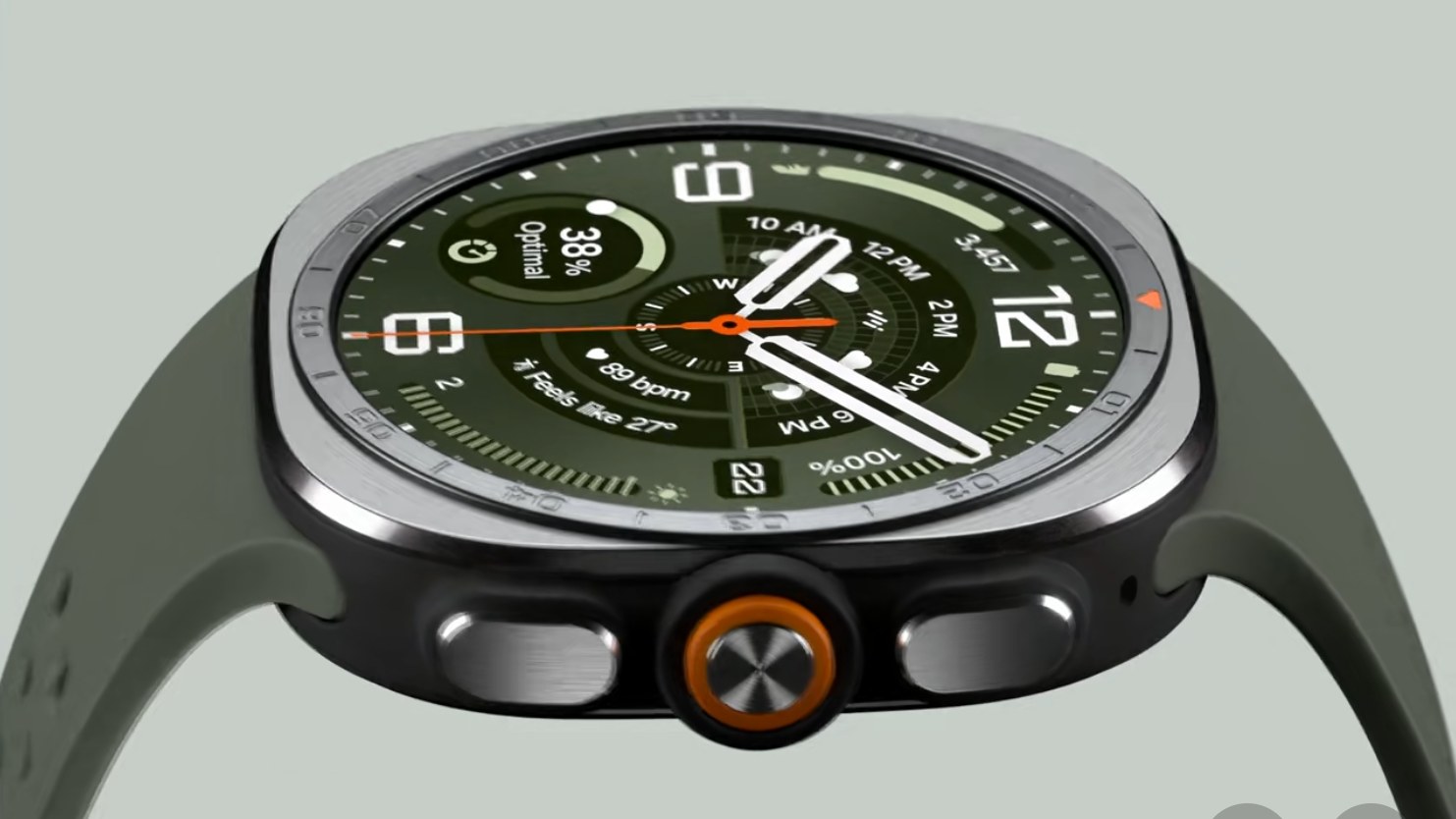
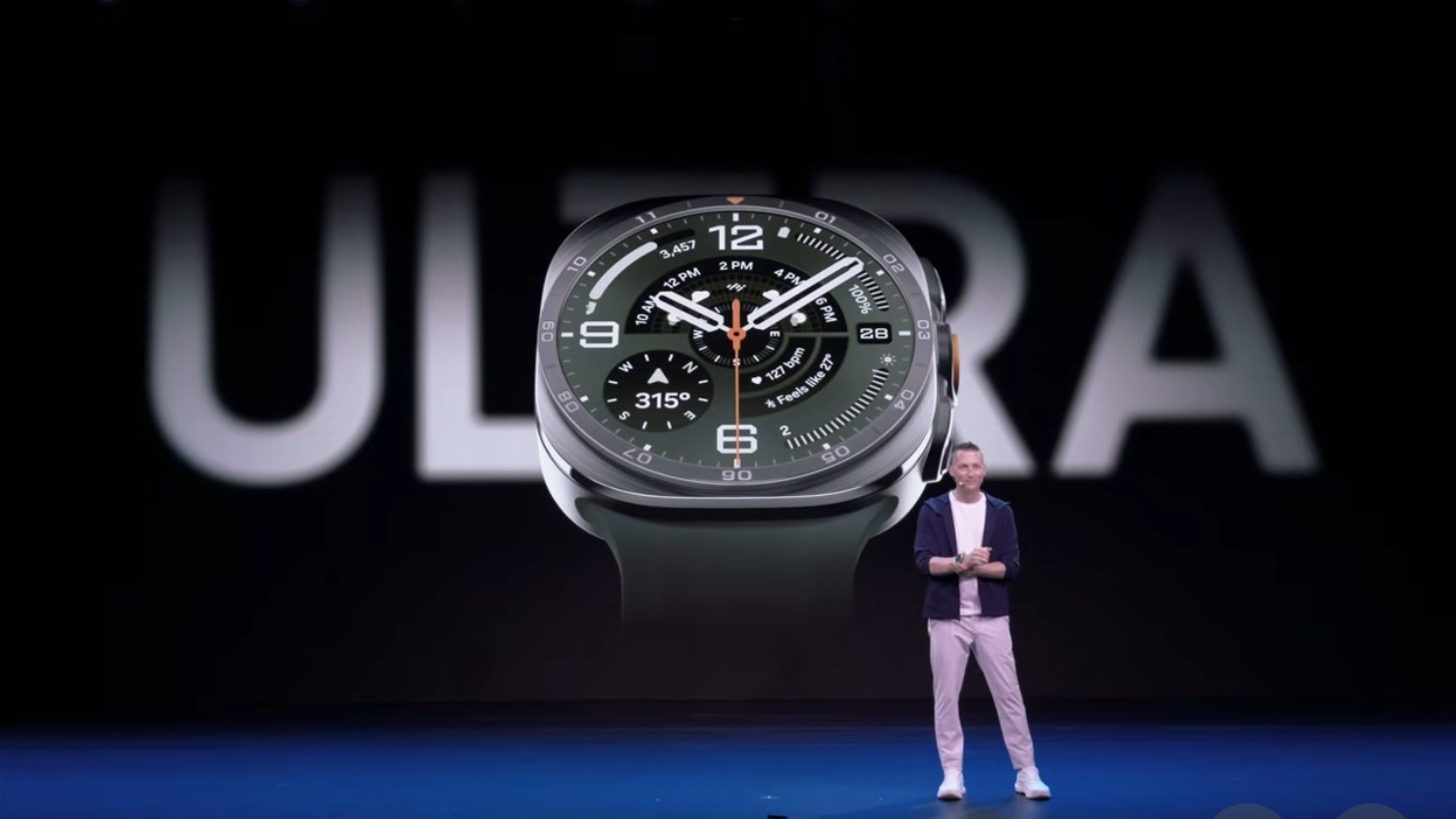
Featured image: Galaxy Unpacked, 22 July 2026. Screenshot: Samsung livestream.
A smartwatch dive computer, with precise limits
What works on August 7: automatic depth, dive time and water temperature. The Mares decompression app ships later this year. An August buyer is not getting the decompression computer advertised for later in 2026.
EN13319 is an international standard for diving accessories. Samsung’s footnote describes it more narrowly as applying to instruments that measure water depth through environmental pressure and, under certain conditions, dive time. It is not a blanket certification of the complete decompression computer, and calling it one would overstate what the standard establishes. The distinction matters because the Mares app is a separate, later piece of the product.
At launch, entering the water can trigger depth, water temperature and dive time on the wrist. The company’s published use limit for the recreational scuba features is 40 metres, and it says the watch shouldn’t be used below that depth. That is separate from 10ATM, which is a laboratory water-resistance classification and not a promise that every dive condition is safe. The later Mares app is what adds the more consequential decompression and ascent-and-descent-rate functions.
Later in the second half of 2026, the Mares app is supposed to turn the watch into what Samsung calls a fully featured decompression dive computer. Samsung’s keynote described no-decompression-limit guidance, real-time nitrogen absorption monitoring and adjustable gradient factors. Those tools model exposure and let trained divers adjust conservatism. This article won’t recommend settings or teach dive planning: follow your agency training and the final Mares documentation.
Recreational diving practice demands redundancy. No diver should trust a single first-generation consumer device as their only computer; carry an appropriate backup computer or gauge and tables in line with your training. Divers Alert Network’s discussion of risk and redundancy gives a real equipment-failure example and explains why backup instrumentation matters. This is the most responsible way to view Samsung’s dive pitch.
The Mares subscription is the biggest problem
The premium diving tools require an ongoing Mares subscription. Samsung hasn’t announced its U.S. price, and the software won’t be ready when the US$699.99 watch ships. Buyers are being asked to pay flagship hardware money now, then accept an unknown recurring cost for the feature that makes this launch distinctive. Depth, dive time and water temperature work at launch, but the decompression computer and ascent-and-descent-rate features come later with the subscription app.
Samsung also has a two-year Wear OS exclusivity period for the Mares dive features. That’s a licensing deal, not an engineering moat. It tells us Samsung bought access to a proven algorithm from a dive company with more than 75 years in the category, which is sensible, but the competitive advantage has an expiry date. The partnership reduces one source of uncertainty without proving Samsung’s sensors, app integration and edge-case behaviour in real water.
Mares, Suunto, Shearwater and Garmin bring years of dive-computer hardware and field data to this market. Samsung brings mass-market smartwatch engineering and a very bright display. Both kinds of expertise have value, but they aren’t interchangeable. As a backup for a trained diver who already owns trusted primary equipment, the Ultra 2 is compelling; as a first and only computer, the delayed subscription software makes no sense at launch.
Samsung Galaxy Watch Ultra 2 hardware earns attention
The 47mm titanium case uses Samsung’s cushion design, merging the screen, bezel and body into one form. A redesigned silicone Marine Band adds air-pocket ventilation, while Trail and PeakForm alternatives target running and dressier use. Samsung cut case thickness by 12 percent despite fitting a larger battery. At 61.5g without the band, it still isn’t a small or subtle watch.
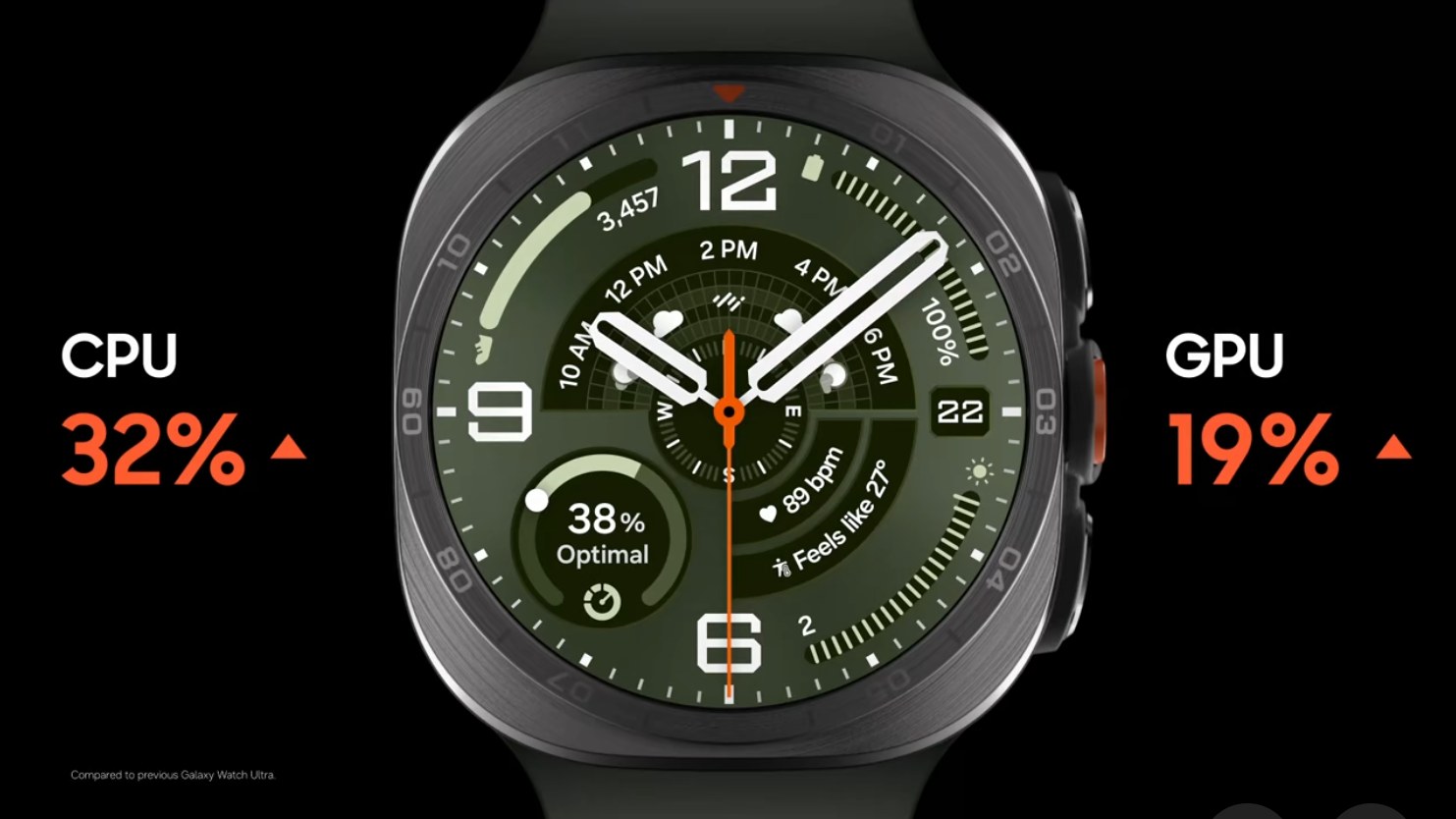
Snapdragon Wear Elite makes its Galaxy Watch debut here. Samsung’s keynote slide claimed CPU performance up 32 percent and GPU performance up 19 percent versus the previous Galaxy Watch Ultra. The five-core, 3nm platform is paired with 2GB of memory and 64GB of storage. Those numbers suggest a meaningful generational update, though app speed, heat and efficiency still need independent measurement.
The 800mAh battery is 35 percent larger, with Samsung claiming up to 60 hours even with the always-on display enabled. TechRadar reached about 60 hours with the always-on display enabled during five days and four nights of testing. Its heart-rate readings ran as much as 20 beats per minute below an Apple Watch Ultra 3 and Polar H10 early in a run, then aligned closely after about 15 minutes. Sleep timing matched the reviewer’s wake periods, while body-fat estimation changed from 9 percent against a gym scale’s 19 percent to 16 percent after hydration and a technique correction. That is useful evidence that fit and measurement technique matter. It does not validate the unreleased Mares decompression app or replace dive-computer field testing.
Samsung’s 5,000-nit figure is a genuine specification win and the company calls it a world first for a watch display. The footnote matters: this is localized peak brightness under high ambient light, not necessarily full-screen sustained output. Brightness can be limited by temperature, environment and usage, and it consumes power. Visibility underwater and in hard sun may be excellent, but a peak number can’t establish either without testing.
Titanium, IP69K and 10ATM don’t remove judgement
Samsung lists titanium, IP69K, 10ATM, EN13319 and MIL-STD-810H. IP69K covers ingress protection against dust and high-pressure, high-temperature water jets. Samsung describes 10ATM as testing equivalent to 100 metres of water for up to 10 minutes, while its ISO 22810 water-resistance rating is also 100 metres. Neither number changes the separately published 40-metre recreational scuba use limit.
Water resistance also degrades with wear, impacts and time. Samsung tells users to rinse and dry the watch after saltwater exposure, and its own page warns that extreme conditions aren’t guaranteed. That’s normal caveat language for rugged electronics, but it matters more when the feature is framed around diving. A titanium shell can’t compensate for ignored maintenance or training limits.
Trail running may be the better launch reason
Trail Run Guidance lets you preview a route, climbs, terrain and estimated completion time before leaving. On the move, it provides turn-by-turn directions, upcoming elevation and distance to checkpoints. These features don’t carry the same safety burden or extra Mares fee as decompression software. For hikers and trail runners, they’re the part of the watch that should be useful on day one.
Nutrition Alert uses personal metrics and workout data to estimate sweat loss, then suggests water or electrolytes in real time. Treat that estimate as guidance, not an exact fluid prescription. Heat, effort, clothing and individual physiology can shift needs, while excessive fluid intake has risks of its own. Samsung hasn’t turned a watch into a sports dietitian.
The navigational package is a more credible reason to accept the large case and higher price. It also fits the Ultra’s stronger shell and brighter display. Samsung’s AI glasses pose the same kind of buying test: a premium specification matters only if the workload can use it. Trail navigation qualifies; checking messages at a desk doesn’t.
The same health platform is available for less
Vitals, Heart Health Score, Fitness Index, Running Coach and the sleep apnea risk feature also run on the cheaper watch. The short version is that Samsung turns overnight biometrics, activity and body-composition estimates into daily guidance. Some features need baseline wear, body-composition readings can vary with hydration and placement, and a consumer risk score isn’t a clinical assessment. Our Galaxy Watch 9 health-feature guide handles the claims, FDA-clearance distinction and subscription catches in detail.
That shared platform makes the buying decision unusually clean. Unless you dive, trail run or genuinely need tougher hardware, save US$320 and buy the Watch 9. The Ultra 2 doesn’t provide US$320 more health insight. It provides durability, visibility, endurance, navigation and a dive roadmap.
Who should skip this
Skip the Samsung Galaxy Watch Ultra 2 if your exercise happens in a gym, on city streets or around a desk. Skip it if you dislike subscriptions, need proven multi-day expedition battery life, or want a compact watch. New divers looking for their first and only computer should buy established dive equipment with guidance from their instructor, not build a life-supporting plan around software promised for later in the year.
Certified divers who already carry a trusted primary computer are the strongest audience. For them, a capable everyday smartwatch that can become a redundant instrument is genuinely novel. The Galaxy Watch Ultra 2 may be the most interesting smartwatch Samsung has made, and most people should still buy the cheaper one.