SSD prices are unlikely to fall broadly in the rest of 2026, but Canadian retail prices are no longer moving in one direction. From July 24 to August 29, our tracker found the lowest qualifying Gen4 1TB price rose 11.1%, while Gen4 2TB fell 3.7% and Gen5 2TB rose 2.5%. NAND contracts are still forecast higher, so buy required storage at a good current price and wait on an optional upgrade.
I have now watched this same movie three times on this site, first with memory, then graphics cards, and now solid-state drives. The plot rhymes every time, but storage has a few wrinkles worth understanding before you spend a cent. This guide separates contract forecasts from the prices Canadian shoppers could actually find.
Last updated: August 29, 2026. TrendForce outlook and daily Canadian tracker data rechecked.
Table of Contents
- Why the SSD price increase happened
- How far SSD prices have climbed
- What our Canadian SSD tracker shows
- Buy now or wait?
- What to buy if you need storage today
- Will SSD prices go down in 2026?
- Who should wait it out
- Frequently asked questions
- The Short Version
Why the SSD price increase happened
The short version is AI, and it’s the same story as memory. NAND flash, the chips that hold your files, is made on production lines that also feed the AI boom. TrendForce reports that the largest makers, Samsung and SK Hynix among them, have been shifting output toward high-margin server and data-center parts, with NAND production increasingly directed toward enterprise SSDs. When the profitable buyers are hyperscalers, consumer drives get whatever capacity is left over.
That’s the whole engine behind the SSD price increase. It’s the exact squeeze that pushed RAM prices up earlier this year, and it rhymes with what happened to GPU prices when wafer supply tightened. Storage just got pulled into the same vortex a little later.
How far SSD prices have climbed
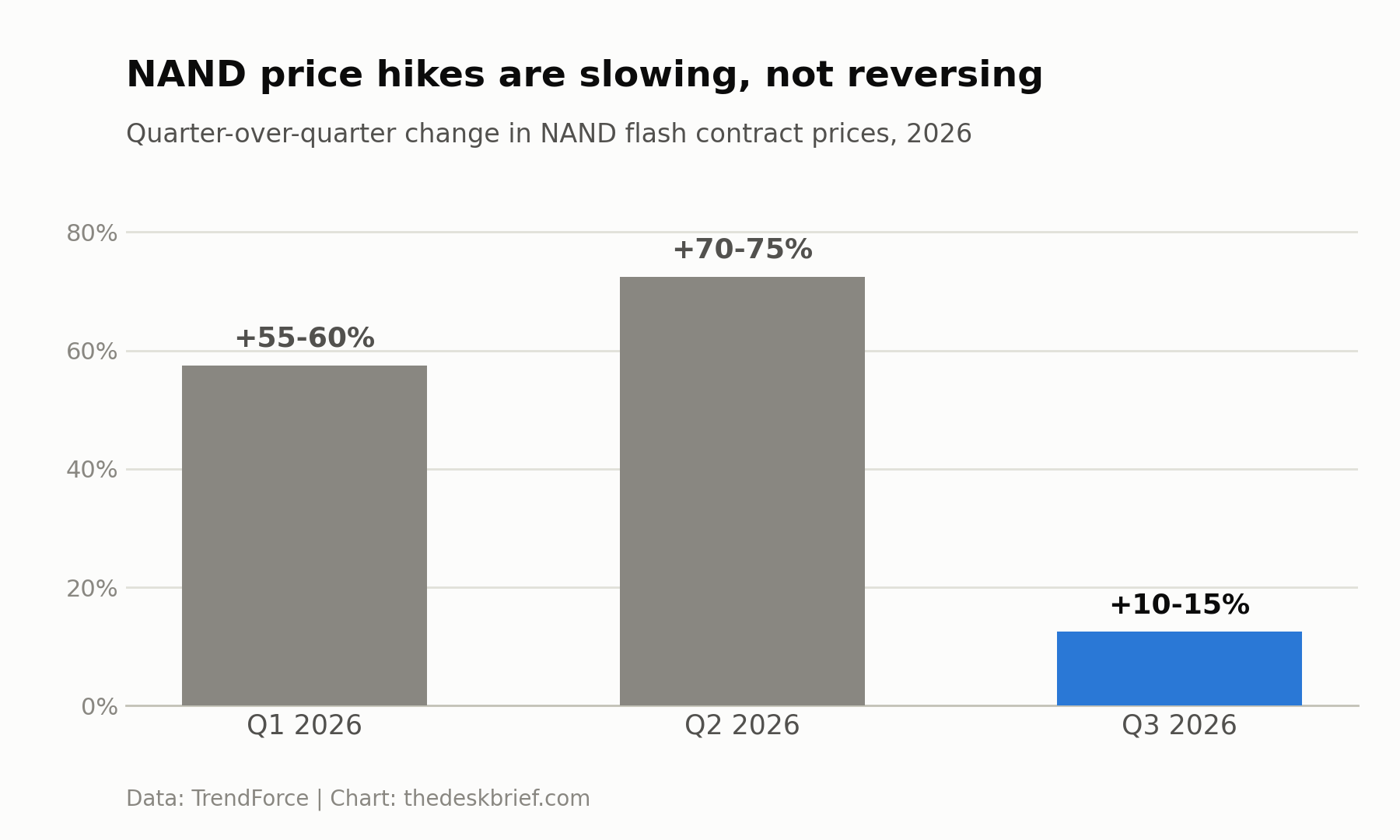
Contract prices tell the cleanest story, because they set what your retail drive costs a few weeks later. TrendForce pegged NAND flash contract prices up 55 to 60 percent quarter over quarter in the first quarter of 2026, then up a brutal 70 to 75 percent in the second quarter. The third-quarter forecast is far calmer at 10 to 15 percent, but read that carefully. It’s a smaller increase, not a decrease.
On the shelf, the damage is plain. Tom’s Hardware‘s running SSD price tracker shows popular 2TB NVMe drives selling well above their record lows, with mainstream models that could be had for roughly US$120 a year ago now starting north of US$200 and climbing from there. For a part that used to fall in price every single year, a near-doubling is a jolt.
Download the underlying data: the Canadian PC parts price tracker dataset includes the SSD history as CSV or JSON, with retailer coverage and missing observations exposed for independent analysis.
What Our Canadian SSD Price Tracker Shows
I rechecked the recorded rows in the site’s daily SSD price tracker against its current exact-capacity and interface rules. Amazon prices are not published, and external, used, refurbished, open-box, wrong-capacity, and mismatched-interface products were excluded. The common July 24 to August 29 window shows a mixed retail market:
| Canadian SSD tier | July 24 low | August 29 low | Change |
|---|---|---|---|
| NVMe Gen4 1TB | CA$197.99 | CA$219.99 | +11.1% |
| NVMe Gen4 2TB | CA$369.79 | CA$355.99 | -3.7% |
| NVMe Gen4 4TB | CA$599.99 | CA$609.99 | +1.7% |
| NVMe Gen5 2TB | CA$472.99 | CA$484.99 | +2.5% |
| SATA 2.5-inch 1TB | CA$134.98 | CA$89.99 | -33.3% |
| SATA 2.5-inch 2TB | CA$292.99 | CA$284.99 | -2.7% |
The table does not say the shortage ended. It says the retail shelf is noisy. A new low-priced product or one sale can pull a capacity down even while supplier contracts rise. Use several tracker dates and compare the exact drive, warranty, NAND, and controller before calling a falling category cheap.
Buy now or wait?
If you actually need the storage, buy when the exact capacity hits a good price in the daily tracker. Contract costs still point upward, but the Canadian lows show that a sale can beat the broad market for one category. Waiting blindly for every SSD to get cheaper has no support; waiting a few days for a tracked dip in the drive you need is reasonable.
The exception is speculation. Don’t buy three drives because you’re scared of next quarter. Hoarding is how shortages get worse, and you’d be sitting on cash tied up in a part that still loses value the moment the market turns. Buy the one drive the build in front of you needs, and skip the panic stockpile.
What to buy if you need storage today
Right-size the purchase. In a normal year I’d tell you to overbuy capacity because the price per terabyte was trivial. This year it isn’t, so buy the capacity you’ll actually use in the next year and no more. A 1TB drive you fill beats a 2TB drive you half use at today’s prices.
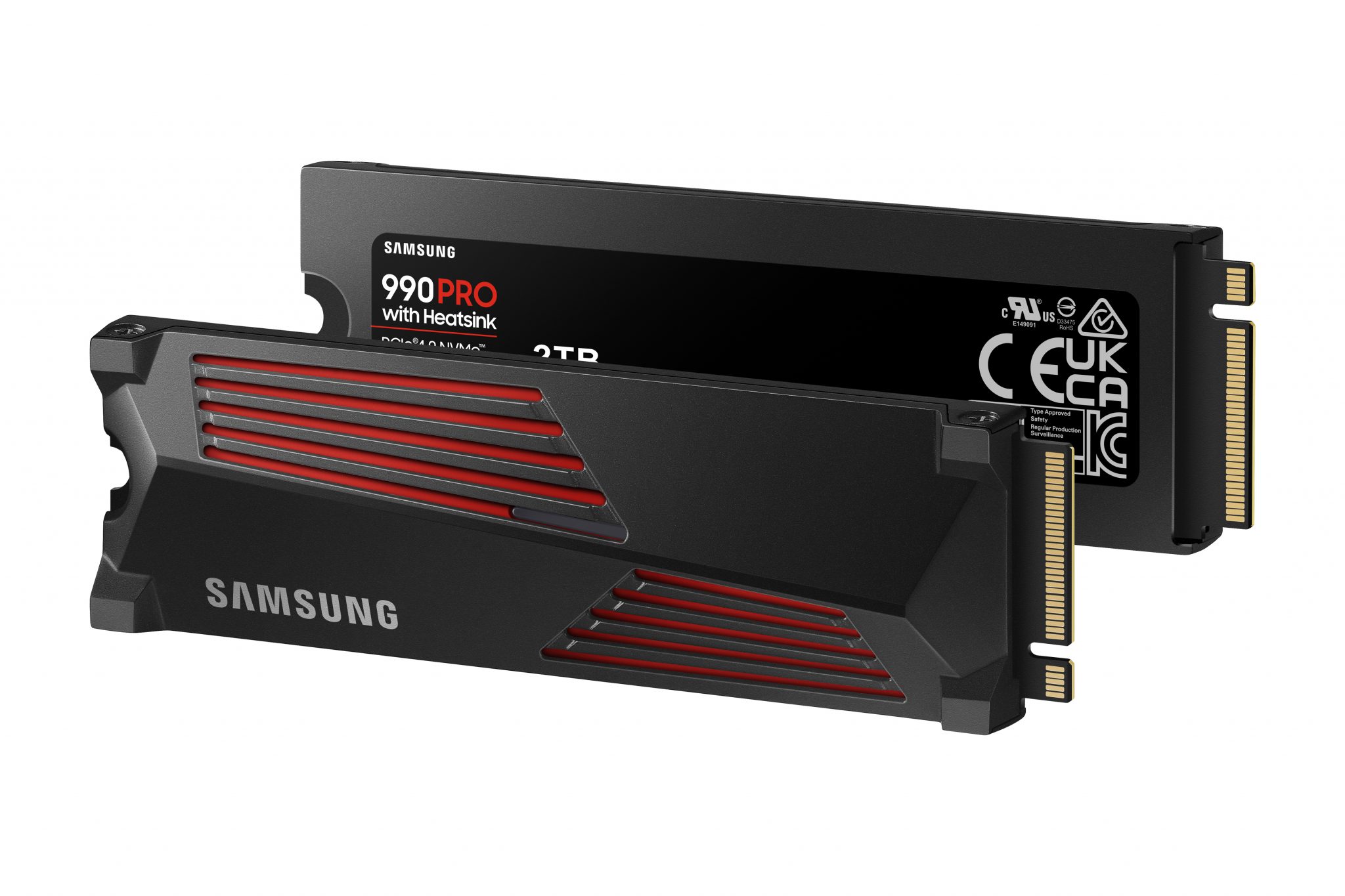
Don’t ignore the cheaper tiers either. A SATA SSD is slower than NVMe on paper, but for a boot drive or a document library you’ll never feel the difference, and it often costs less per gigabyte right now. If you’ve got an old drive in a drawer, Tom’s Hardware has shown that even aging SSDs in a cheap enclosure make workable external storage while prices stay ugly. Our Samsung 990 QLC review walks through where QLC drives make sense and where they don’t.
Will SSD Prices Go Down in 2026?
Probably not across the whole market. TrendForce still forecasts NAND contract prices rising 10% to 15% in the third quarter. Its August 19 market bulletin adds an important wrinkle: weak consumer demand and resistance to higher prices have left the spot market range-bound, even while server customers secure contracts early. That split matches the mixed Canadian retail table better than a simple “everything is rising” claim.
The one bright spot is the deceleration and new capacity planning. TrendForce says manufacturers are restarting expansion plans, with new fab capacity discussed for 2027 and 2028. That is not a promise of cheap retail SSDs this year, and the broader memory shortage outlook remains relevant. Keep an eye on the SSD price tracker if you would rather time a real Canadian dip than guess from a global forecast.
Who should wait it out
Plenty of people should do nothing. If your current drive has free space and works, this is a bad month to upgrade for the sake of it. The performance gap between a three-year-old NVMe drive and a new one is small for everyday desk work, and you’d be paying peak prices for a change you’ll barely notice.
You can also buy time without buying a drive. Offloading finished projects to an external disk or cloud storage, clearing game installs you’re not playing, and trimming duplicate files reclaims more space than you’d think. That keeps you out of the market until the SSD price increase eases, which is the most affordable move on the table.
Frequently asked questions
Will SSD prices go down in 2026?
Probably not across all categories. TrendForce still forecasts NAND contracts rising 10% to 15% in the third quarter, while its August bulletin calls the consumer spot market range-bound. Our Canadian tracker is mixed: Gen4 1TB rose 11.1%, Gen4 2TB fell 3.7%, and Gen5 2TB rose 2.5% from July 24 to August 29.
Should I buy an SSD now or wait until 2027?
If you need the storage now, watch the exact capacity in the daily tracker and buy a qualifying dip. Wait when the upgrade is optional or when the current drive has plenty of space. New capacity is being planned for 2027 and 2028, but that does not guarantee a broad consumer price drop on your schedule.
Why are SSD prices going up?
The SSD price increase comes down to NAND flash supply being redirected toward AI servers and enterprise storage. Samsung, SK Hynix, and other makers earn more from data-center parts, so consumer drives get less capacity and higher prices.
How much does a 2TB NVMe SSD cost now?
On August 29, the lowest qualifying Canadian observation was CA$355.99 for NVMe Gen4 2TB and CA$484.99 for NVMe Gen5 2TB. Those are entry prices from the tracked retailer pool, not recommendations for the specific products. Check the live tracker for model, retailer, and warranty before buying.
The Short Version
The SSD price increase is real, and TrendForce still expects NAND contracts to rise 10% to 15% in the third quarter. Canadian retail lows are mixed rather than uniformly higher: Gen4 1TB rose 11.1%, Gen4 2TB fell 3.7%, and Gen5 2TB rose 2.5% from July 24 to August 29. Buy required storage on a verified tracker dip. If the upgrade is optional, keep the working drive and wait for the price of the exact capacity and model to improve.