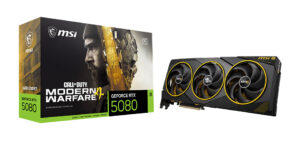
Qwen 3.8 27B RTX 5090 looks like an obvious pairing until the software asks one 32GB card to hold the model, runtime overhead, and a long key-value cache. At current Canadian street prices above CA$7,000, the distinction matters: a four-bit build runs, but the native 262,144-token context, multi-token prediction, and the fastest measured speed do not all arrive in the same single-card configuration.
The buying line is simple. Existing RTX 5090 owners have a capable short- and medium-context machine if they match the runner to the job; owners of 24GB RTX 3090 or RTX 4090 hardware should test what they have first. Anyone who needs the full context window should budget for more than one consumer GPU or use a hosted endpoint. This conclusion comes from Qwen’s model card, vLLM’s deployment recipe, NVIDIA and Best Buy Canada materials, and Tom’s Hardware’s September 8, 2026 benchmarks; I did not run the hardware tests.
For alternatives that trade some coding depth for lower memory use or broader chat skills, see the best local LLM guide.
Table of Contents
- Qwen 3.8 27B RTX 5090 Limits
- What 32GB Actually Runs
- The Runner Matters More Than Expected
- What a 24GB GPU Can Still Do
- The Full Context Window Costs More
- My Hardware Recommendation
- Who Should Skip This
- How I Researched This
- Frequently Asked Questions
- The Short Version
Qwen 3.8 27B RTX 5090 Limits
Qwen released the 27-billion-parameter dense model on August 14, 2026. The official Qwen model card describes a native vision-language model with thinking controls, 64 layers, and a 262,144-token native context window. It is distributed under the Apache 2.0 license. Those are model capabilities, not a promise that one consumer card can expose all of them at once.
The four-bit weights are only the first memory bill. The runner needs working space, the vision components consume memory, and the key-value cache grows with context. A desktop environment takes its cut too. Counting the download size and declaring victory is the local AI version of measuring a sofa without checking the doorway.

What 32GB Actually Runs
The current vLLM recipe for Qwen 3.8 27B is refreshingly specific. A single RTX 5090 exposes 31.4 GiB of usable memory, not the neat 32GB printed on the box. Its verified NVFP4 configuration caps the model at 32,768 tokens and has to disable CUDA graph capture with eager execution to avoid an out-of-memory error during startup.
That is still useful. A 32K context can hold a long conversation, a substantial code file, or a bundle of working documents. It is nowhere near the native 262K ceiling, though. The single-card recipe is a practical workstation configuration, not the complete model experience.
| Hardware | Verified fit | Main catch |
|---|---|---|
| RTX 3090 or RTX 4090, 24GB | Q4_K_M in llama.cpp, about 112K context in Tom’s testing | Little spare VRAM and poor long-context behaviour on the RTX 4090 test |
| One RTX 5090, 32GB | NVFP4 in vLLM at 32K context | Eager execution required; no full native context |
| Two RTX 5090 cards | 262K context with tensor parallel vLLM | Huge platform cost and more setup complexity |
| One GPU with more than 32GB | More room for context and runtime overhead | Workstation pricing |
The Runner Matters More Than Expected
Tom’s Hardware tested Qwen 3.8 27B across RTX 5090, RTX 4090, RTX 3090, DGX Spark, Mac Studio, and Ryzen AI Halo systems. Its single RTX 5090 llama.cpp run could allocate the full context, but time to first token at long context stretched to roughly 30 minutes. The outlet concluded that something in that software path was broken.
Switching runners changed the result. Tom’s measured about 20 tokens per second with a single RTX 5090 using vLLM without multi-token prediction. SGLang was nearly three times faster than that single-card vLLM recipe in some tests and allowed 37,740 tokens of context. Same GPU, very different answer.

What a 24GB GPU Can Still Do
An RTX 3090 or RTX 4090 isn’t automatically obsolete here. Tom’s Hardware fit the Q4_K_M GGUF build on both 24GB cards with a Q8_0 key-value cache and reached roughly 112K tokens before running out of VRAM. That is far more context than the verified single-card vLLM recipe on the RTX 5090.
The compromise is operational. The cards needed almost every byte of VRAM, so the test setup benefited from a separate display GPU or headless operation. The RTX 4090 also hit the same long-context llama.cpp performance cliff as the RTX 5090, while the RTX 3090 oddly did not. That points to a software issue, not proof that the older card is universally faster.
If you already own 24GB hardware, start there. Our local LLM setup guide covers the basic workflow, while the RAM for local AI guide explains why system memory still matters when the GPU is full. Buying a replacement before testing your actual context needs is an expensive way to move the bottleneck.
The Full Context Window Costs More
Two RTX 5090 cards changed the throughput story. Tom’s Hardware measured 70 to 80 tokens per second across its context sweep with vLLM, then 100 to 110 tokens per second after enabling the model’s built-in multi-token prediction. The dual-card configuration also exposed the full 262K native context.
The outlet priced its complete dual-GPU platform above US$13,000. That isn’t a normal home-office upgrade. It is a specialized local AI server wearing a desktop PC’s clothes. A single higher-memory workstation GPU is another route, but the price problem merely changes shape.
My Hardware Recommendation
For Qwen 3.8 27B RTX 5090 use, keep the card if you already own it and choose the runner around the job. Use the verified single-card vLLM recipe for a dependable 32K target. Try SGLang when decode speed matters more and you can tolerate a more technical setup. Recheck both projects before installing because this result is software-sensitive and updates can move the line.
If you are shopping, my recommendation is to wait. Best Buy Canada listed the Founders Edition at CA$2,899.99 MSRP, but the Founders Edition has been sold out since launch. Street prices from third-party sellers currently sit above CA$7,000. At either price, you get excellent short-context performance potential, but not the full model. An existing 24GB card is the cheaper experiment, and a hosted endpoint is the saner choice for occasional 262K jobs.
Apple unified memory is worth considering if capacity and quiet desk use matter more than peak decode speed. Our Mac mini versus Mac Studio local AI comparison covers that trade. Different architecture, same rule: buy for your real model and context, not the largest number in the keynote.
Who Should Skip This
Skip a Qwen 3.8 27B RTX 5090 build if you expect the full native context on one card, want a one-click desktop app, or only run local models occasionally. You would be paying flagship money to become your own inference administrator. Some people enjoy that. They also tend to own label makers for their network cables.
Also skip the upgrade if your current 24GB GPU already gives acceptable output at the context you use. A 32K limit can be plenty for chat and focused coding. Long agent traces, giant repositories, video input, and large document collections are the workloads that expose the memory problem.
How I Researched This
I treated Qwen’s model card as the source for architecture, licensing, and native context. I used vLLM’s current recipe for verified launch flags and memory behaviour on one and two RTX 5090 cards. Performance and platform conclusions come from Tom’s Hardware’s independent lab work, not from vendor claims or community screenshots.
I did not transfer numbers between runners, quantizations, or GPUs. Tokens per second without a named engine and configuration are trivia, not buying evidence. The software is moving quickly, so the runner-specific details here are dated September 9, 2026.
Frequently Asked Questions
Can one RTX 5090 run Qwen 3.8 27B?
Yes. The verified vLLM NVFP4 recipe runs on one RTX 5090 with a 32,768-token context and eager execution. Tom’s Hardware also loaded a four-bit GGUF in llama.cpp, although its long-context performance was unusably slow in that test.
Is 32GB of VRAM enough for the full 262K context?
Not in the verified single-card configurations checked for this article. One RTX 5090 was limited to 32K in vLLM and 37,740 tokens in SGLang. Tom’s Hardware used two RTX 5090 cards to reach the full native context with practical speed.
Can an RTX 3090 or RTX 4090 run it?
Yes. Tom’s Hardware fit a Q4_K_M build on both 24GB cards using a Q8_0 key-value cache and reached about 112K context. VRAM headroom was extremely tight, and the RTX 4090 suffered a long-context performance problem in llama.cpp.
Should I buy an RTX 5090 just for Qwen 3.8 27B?
No, unless a 32K single-card configuration matches your work and you also need the GPU for other demanding tasks. Existing 24GB cards can run the model. Full native context calls for more than 32GB or multiple GPUs, which changes the budget completely.
The Short Version
Qwen 3.8 27B RTX 5090 is viable on one card, but 32GB is a short-context solution. The verified vLLM target is 32K, while two cards reached the native 262K window and 100 to 110 tokens per second with multi-token prediction in Tom’s Hardware testing. Keep an RTX 5090 if you own one. If you are buying from scratch, test a 24GB card first or pay for hosted long-context work rather than building a US$13,000 monument to occasional prompts.