A 32GB DDR5 kit that sold for under US$100 last summer now starts at about US$375, and that one line settles most of the question I keep getting asked: should I build a PC now or wait? The honest answer is that memory, not the processor and not the graphics card, is what makes 2026 a genuinely bad year to buy parts.
Here is the thing nobody quoting you a build wants to say out loud. The components that used to force the hard choices, the CPU and the motherboard, are basically flat. RAM and SSDs are the line items that went vertical, and they dragged the price of a sensible desk PC up with them. So the real question is not whether PCs got expensive. It is whether the specific parts you need are the ones that got expensive, and whether waiting saves you anything at all.
I will walk through what each part costs right now, what the analysts expect next, and the one budget route that still holds up. If you want the verdict first: build only if you genuinely need the machine now, and lean on a bundle or DDR4 to blunt the memory tax. Waiting for cheaper RAM is a bet the supply data does not support.
Table of Contents
- Start With the One Number That Matters: RAM
- The Parts That Have Not Lost Their Minds
- The Case for Waiting Is Thinner Than It Feels
- When Building Now Is the Right Call
- The DDR4 Escape Hatch
- Who Should Skip This
- FAQ
- The Short Version
Start With the One Number That Matters: RAM
Memory is the whole story, so start there. According to Tom’s Hardware, you can no longer buy 32GB of DDR5 for less than US$374.97, a capacity that was an afterthought at under US$100 a year ago. Dig into specific kits and it looks worse than the averages let on.
This page contains affiliate links. If you buy through these links, we may earn a small commission at no extra cost to you. Full disclosure.
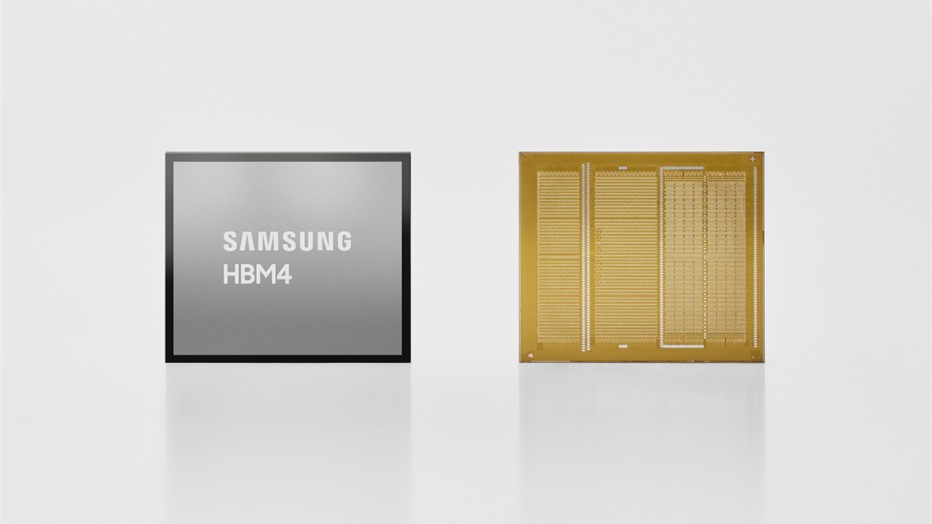
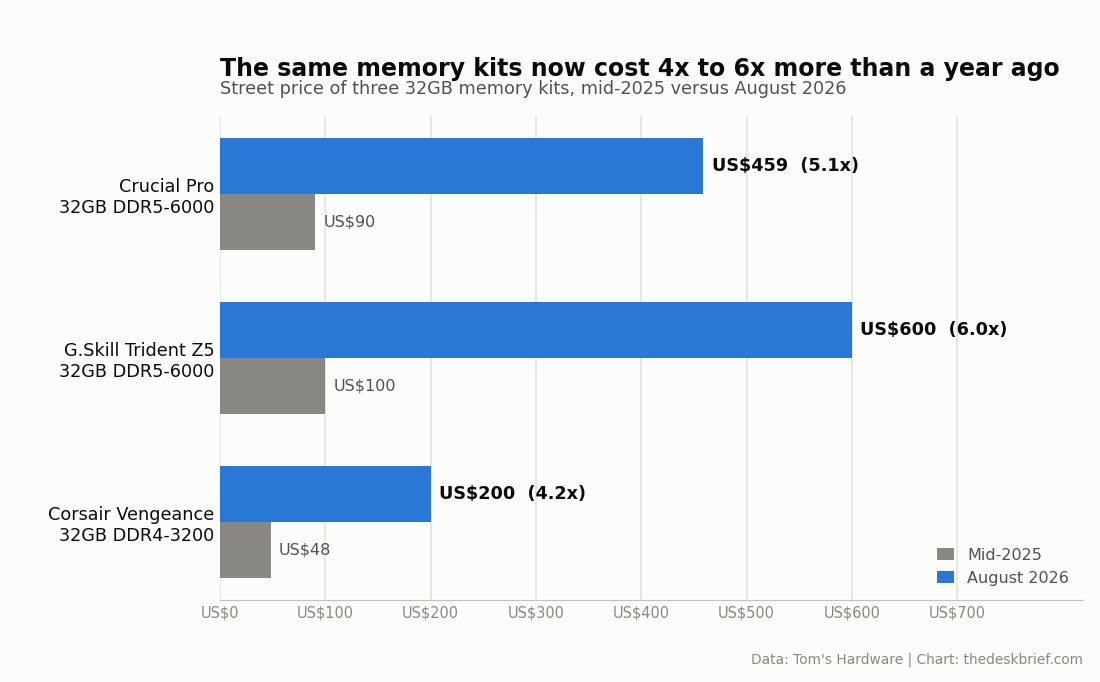
The reason sits in that photo. Memory makers are pouring capacity into high-margin AI parts like Samsung’s HBM4, and consumer DDR5 is what gets starved. The Crucial Pro 32GB DDR5-6000 kit now costs several times its mid-2025 price, when it is in stock at all. G.Skill’s Trident Z5 Neo, a longtime value pick, climbed from a low of US$100 to US$599.99. Even 16GB of DDR5 runs about US$209, double the money for half the capacity you would have paid last year.
If you already own working memory, the smart play is usually to keep it. Our guide to RAM prices in 2026 covers why sitting tight beats paying these numbers, and nothing below changes that for anyone who does not strictly need the upgrade.
The Parts That Have Not Lost Their Minds
Here is the good news, because there is some. Tom’s Hardware notes that CPU, motherboard, and cooling prices are holding steady or even falling. The Ryzen and Intel chips you would actually drop into a 2026 build cost roughly what they did a year ago. Graphics cards and SSDs are the other sore spot: the same reporting has SSDs that once cost US$38 now fetching US$200, and our GPU pricing breakdown and SSD price analysis show neither is a bargain. But a CPU and board that have not moved change the math on should I build a PC now or wait, because a real chunk of the build is not inflated at all.
The Case for Waiting Is Thinner Than It Feels
The instinct is to wait for prices to fall. The supply data says do not hold your breath. TrendForce reports that conventional DRAM contract prices rose 90 to 95 percent quarter over quarter in the first quarter of 2026, the steepest jump it has ever recorded, and it still expects prices to climb through the third quarter. The one crumb of comfort, that the rate of increase is slowing, comes from buyers hitting their spending limit, not from supply catching up.
It gets bleaker. SK hynix has warned that manufacturing constraints will persist through 2030, and Tom’s Hardware quotes industry figures saying 2027 could be worse for shortages than 2026. One Adata executive floated a wait of a decade or more. So when you weigh should I build a PC now or wait, treat waiting as a real cost, not a free option. There is a live chance the same kit costs more next year, not less.
When Building Now Is the Right Call
If you need the machine for work or school this season, build it. You are not going to time a bottom that the analysts cannot find. The trick is to stop buying memory as a standalone part. Tom’s Hardware has spent months flagging Newegg bundles where the RAM effectively costs about US$200 once you buy it alongside a motherboard and CPU, because those parts are priced normally. That is the most effective way to cut the memory tax without cutting capacity.
Pre-built desktops have quietly become fair value too, for the same reason. Big vendors buy memory on long contracts and have not repriced as violently as the spot market, so a pre-built can undercut a self-assembled machine part for part. That felt absurd to type, and in 2026 it is often true anyway. The laptop version of this same call lives in our guide on whether to buy a laptop now or wait.
The DDR4 Escape Hatch
There is one more route, and it is why should I build a PC now or wait does not have to end in sticker shock. DDR4 came back. It is not cheap either, a 32GB Corsair Vengeance DDR4-3200 kit that cost US$48 last year now runs about US$200, but the platform total can still land lower. AMD is leaning into this, reviving the AMD Ryzen 7 5800X3D and, per Tom’s Hardware, watching the roughly US$80 AMD Ryzen 5 5500 briefly top Amazon’s CPU best-seller chart during the crunch as builders hunt for cheap DDR4 platforms.
The complication is that the gap keeps narrowing. Tom’s Hardware’s CPU analyst points out that a AMD Ryzen 5 7600X3D with 16GB of DDR5-6000 runs only about US$80 more than a DDR4-based 5800X3D, and the DDR5 chip is faster. Treat DDR4 as a budget hedge, not a free lunch. It earns its place mainly if you already own DDR4 memory or a compatible board.
Who Should Skip This
Not everyone asking should I build a PC now or wait should do either. If your current machine still handles your daily work, skip the whole exercise. There is no performance leap waiting in 2026 that justifies paying four to six times list price for memory. Put the money into the part that actually hurts, more storage or a better monitor, and revisit the full build when memory eases.
Skip a from-scratch build, too, if your only goal is a modest all-round PC. At today’s RAM prices, a pre-built or even a solid used machine will almost always beat a new self-assembled box on price. The DIY premium used to buy you savings and control. Right now it mostly buys you control.
FAQ
Should I build a PC now or wait in 2026?
Build now only if you need the machine now. Waiting assumes RAM gets cheaper, and every forecast, from TrendForce to SK hynix, points the other way into 2027. If you can stretch your current PC a while longer, that is the cheaper path.
How much does 32GB of DDR5 cost right now?
The most affordable 32GB DDR5 kit starts around US$374.97, per Tom’s Hardware, with popular Corsair and Crucial kits north of US$400. A year ago the same capacity sold for under US$100.
Is DDR4 worth it during the memory shortage?
It can be, but it is not cheap. A 32GB DDR4-3200 kit that cost US$48 last year now runs about US$200. DDR4 makes sense mostly if you already own the memory or a compatible board, since a DDR5 budget platform costs only about US$80 more and runs faster.
Will RAM prices go back to normal soon?
Not soon. TrendForce sees prices still rising through 2026, SK hynix expects constraints through 2030, and one Adata executive floated a decade-long wait. No credible forecast calls for a near-term drop.
The Short Version
Should I build a PC now or wait comes down to one part. Memory has quadrupled to sextupled in a year, the CPU and motherboard have not budged, and the analysts see RAM getting worse before it gets better. Build now if you need it, buy the RAM in a bundle or lean on DDR4 to soften the blow, and do not wait for a price drop the supply data refuses to promise. If your current machine still does the job, the smartest 2026 build is the one you put off.